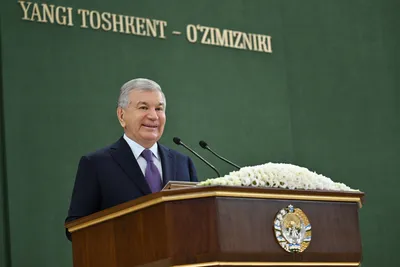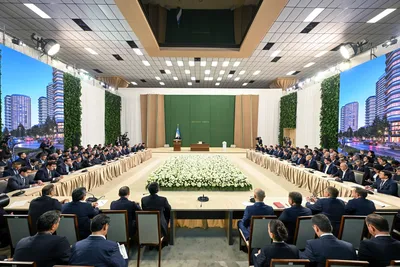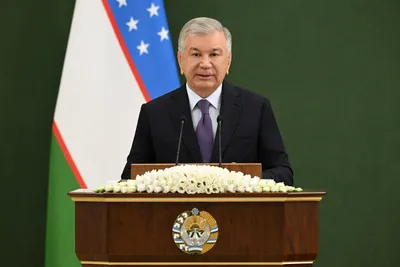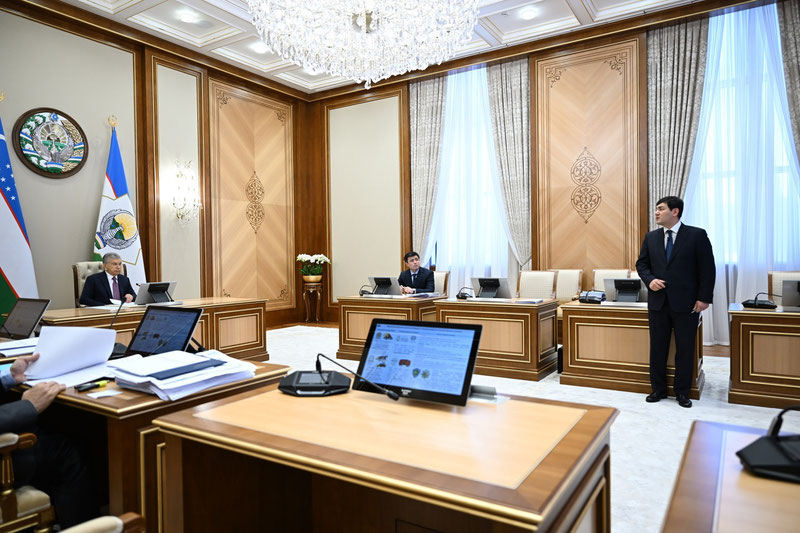
President Shavkat Mirziyoyev reviewed proposals for creating more favorable economic and administrative conditions for small business entities. The proposals included revising certain tax and reporting systems that hinder the legal growth of entrepreneurs.
In recent years, Uzbekistan has implemented a number of reforms to support entrepreneurship, reduce the tax burden, and simplify government services. However, it was noted that some existing restrictions continue to obstruct the free development of small businesses.
The 1 billion limit forces businesses to operate in the "shadows"
Currently, small business entities operate under a simplified tax regime when their annual revenue is up to 1 billion soums. Entrepreneurs exceeding this threshold switch to a system of paying value-added tax and income tax.
This threshold was introduced in 2019, and prices have risen sharply over the past years. As a result, it was noted that many entrepreneurs, when approaching the 1 billion soum limit, resort to methods such as concealing turnover, not issuing receipts, or artificially splitting their business into multiple entities.
In this regard, it was proposed to increase this threshold from 1 billion soums to 5 billion soums starting June 1, 2026.
A new procedure for value-added tax may be introduced
The presentation also put forward an initiative to introduce a simplified system for paying value-added tax for the public catering, trade, and service sectors.
According to this, entrepreneurs may voluntarily pay a 6% value-added tax and be exempt from income tax. At the same time, those who wish may continue to operate under the existing general tax system.
According to officials, this procedure will simplify tax calculations, reduce excessive bureaucratic burden, and decrease instances of concealing turnover.
Errors in value-added tax reports have increased
The presentation also analyzed problems related to value-added tax administration. It was reported that the number of reports for entrepreneurs who switched to this system has doubled.
In 2025, 77 percent of taxpayers with errors identified in their reports were precisely value-added tax payers.
Therefore, a number of relief measures were proposed, including:
— automatic refund of negative value-added tax differences for low-risk entrepreneurs;
— abolition of the practice of temporarily suspending the value-added tax certificate;
— revision of the mandatory value-added tax procedure on imports;
— automation of the process of opening bank accounts.
Limits may also be placed on tax inspections
To reduce administrative pressure on small businesses, it was proposed to give entrepreneurs the opportunity to independently correct errors.
Additionally:
— not conducting tax audits in cases where the tax risk is up to 500 million soums;
— it is planned not to assign field tax inspections when the risk level is up to 100 million soums.
Relief measures also for restaurants and hotels
A number of conveniences are also envisaged for the public catering and hotel services sector.
In particular:
— allowing the sale of alcohol and tobacco products for cash;
— abolishing the requirement regarding the share of non-cash revenue when refunding a portion of value-added tax;
— it was proposed to formalize certain employees under a simplified procedure.
An additional 2 trillion soums may go to the budget
According to data, these measures could serve the legal growth of over 600,000 small business entities.
Through the increased transparency of the tax base, an additional revenue of at least 2 trillion soums per year is forecast to flow into the state budget.
President Shavkat Mirziyoyev approved the proposals and gave relevant instructions to those responsible for creating a fair and favorable environment for small businesses, simplifying tax administration, and strengthening entrepreneurs' trust through digitalization.