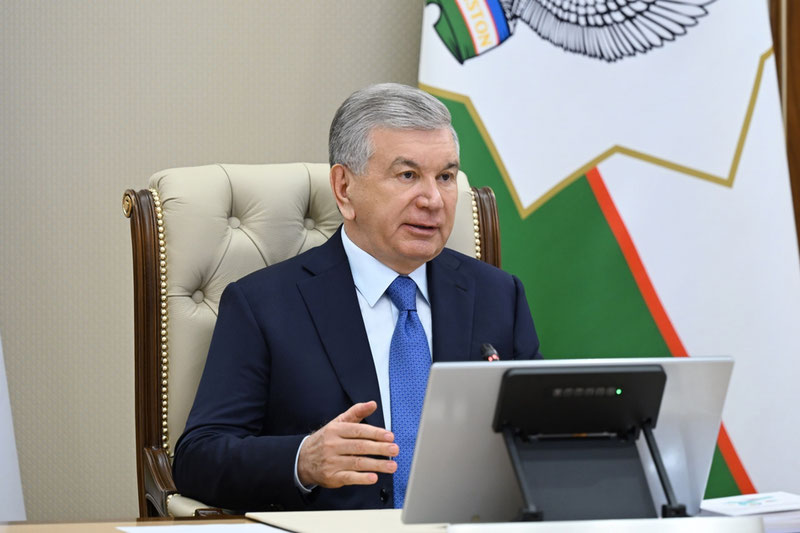
President Shavkat Mirziyoyev reviewed a presentation of proposals aimed at providing medical care to patients with oncological, hematological, and oncohematological diseases, as well as developing the palliative care system. The press service of the President reported this.
The presentation examined a number of initiatives for early detection of cancer, treatment using modern methods, and expanding the coverage of specialized medical services for the population.
It was noted that the country plans to increase the coverage of targeted screening examinations for the most common types of cancer among the population to at least 60 percent. Additionally, the goal is to raise the five-year survival rate among patients with oncological diseases from the current 35 percent to at least 45 percent.
For this purpose, starting from 2027, the National Cancer Control Program, developed with the participation of the World Health Organization and international experts, will be gradually implemented in the regions.
Within the framework of the program, it is envisaged to increase the oncological alertness of primary healthcare workers, retraining them in early diagnosis of the initial signs of cancer and timely referral of patients to specialized institutions.
Also, new clinical guidelines will be adopted based on international recommendations, and a multidisciplinary approach will be introduced in oncology. In this case, the diagnosis and treatment strategy for the patient will be determined simultaneously with the participation of several specialists.
Programs for early detection of the most common types of cancer will be developed, and rapid diagnostic centers will be established. This will allow patients to receive an accurate diagnosis within a short time.
The presentation also paid special attention to the issue of modernizing radiation therapy services. In particular, old cobalt units will be gradually replaced with modern linear accelerators, and the possibilities of high-dose brachytherapy will be expanded.
The development of palliative and hospice services has been identified as one of the important directions of state policy. According to the plan, by 2030, the coverage of the population with palliative care will be increased to at least 80 percent.
For this purpose, starting from September 1 of this year, a unified system for providing palliative and hospice care will be introduced in the republic. The system will operate based on the integration of medical and social services, and the processes of identifying, registering, and serving patients will be carried out through an electronic information system.
Also, mobile palliative teams providing medical care at home will be established. The gradual establishment of hospice facilities in all regions is planned.
Initially, the activities of mobile groups serving oncological patients in need of palliative care will be launched in the Mirzo Ulugbek district of Tashkent city. In the Samarkand region, a special hospice center will be established for children with severe and incurable diseases.
For patients registered in the electronic system as needing palliative care, a practice of assigning disability without additional medical examinations will be introduced. Patients in need of care at home will be provided with functional beds and special mattresses based on a voucher system.
The presentation also discussed issues of further improving medical care provided to patients with hematological and oncohematological diseases. In particular, it is planned to increase the rate of early detection of these diseases to 60 percent by 2030, and to reduce the time from diagnosis to transplantation surgery from six months to three months.
In addition, new proposals on material incentives for medical and pharmaceutical workers employed in state medical institutions were considered. According to them, it is proposed to cover part of the contract fees for children of medical workers with at least 15 years of work experience in higher education institutions, as well as part of the initial down payment for purchasing housing through a mortgage loan.
President Mirziyoyev approved the presented proposals and gave relevant instructions to those responsible for bringing oncological and hematological medical care closer to the population, widely introducing modern diagnostic and treatment technologies, and effectively implementing the outlined measures.