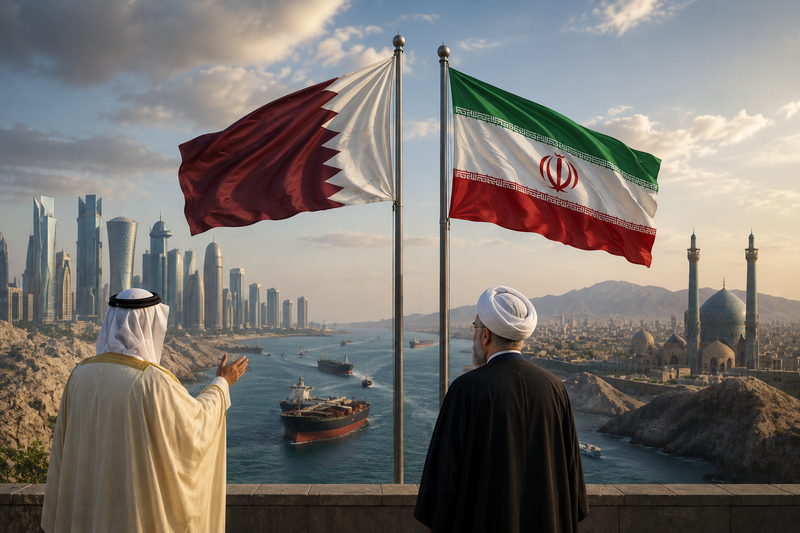
The main purpose of the visit — to restore diplomatic dialogue between the US and Iran and to ease tensions in the Strait of Hormuz.
As a US ally in the Persian Gulf and a neighbor of Iran, Qatar has been one of the covert diplomatic channels between the two sides since the war began. The country also played an important role in reaching the agreement that led to a temporary ceasefire in June.
The visit is taking place as the war approaches its sixth month, but no significant results have been observed on a diplomatic settlement. Although fighting has largely stopped, the sides have yet to agree on the navigation regime in the Strait of Hormuz, which is of strategic importance for the world oil supply.
According to the spokesman of the Iranian Foreign Ministry, Ismail Baghaei, Sheikh Mohammed will discuss in Tehran the continuation of Qatar's mediation efforts and the latest events in the region. The Qatari Foreign Ministry, for its part, said that the talks would also raise the issues of restoring freedom of navigation in the Strait of Hormuz and returning to the situation that existed before 28 February.
Before the war, about one-fifth of the world's oil supply passed through the Strait of Hormuz. However, after the conflict began, oil flows along this route declined sharply. On 24 August, roughly 5 million barrels of oil passed through the strait per day, while before the war this figure was nearly 20 million barrels.
On 26 August, Iran's Islamic Revolutionary Guard Corps announced that Iran and Oman had reached an agreement on dividing the waters of the Strait of Hormuz and the revenues derived from it. However, a senior Iranian official said the agreement had not yet been finalized and negotiations on its details were ongoing.
Tehran has maintained control over the Strait of Hormuz as leverage in negotiations. The Iranian side has also raised the issue of collecting fees from some ships for passage, to which the US has objected.
In recent weeks, Iran and Oman have been holding negotiations on restoring and controlling the movement of ships through the strait. So far, however, no final agreement has been reached on the full opening of the strait.
The Qatari Foreign Ministry said that Sheikh Mohammed's talks in Tehran would also discuss creating the necessary conditions for reducing tensions in Hormuz and continuing dialogue.
According to the UN's International Maritime Organization, between 28 February and 21 August, 68 confirmed incidents were recorded in the Strait of Hormuz and the Middle East. Nineteen sailors were killed in them.