Major investment projects aimed at radically updating the transport infrastructure in Uzbekistan are accelerating. Among the plans presented to President Shavkat Mirziyoyev are key initiatives regarding the alternative "Tashkent — Samarkand" highway, the New Tashkent International Airport, and the Navoi Aviation Hub.
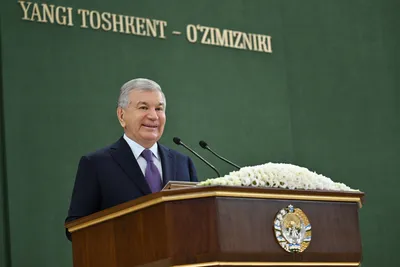
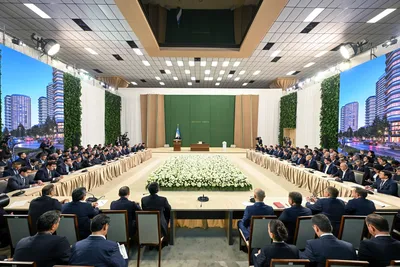
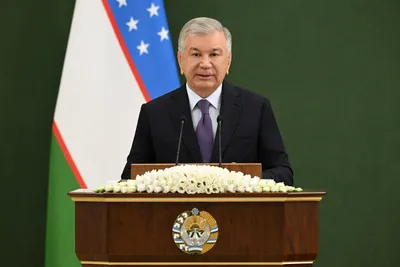
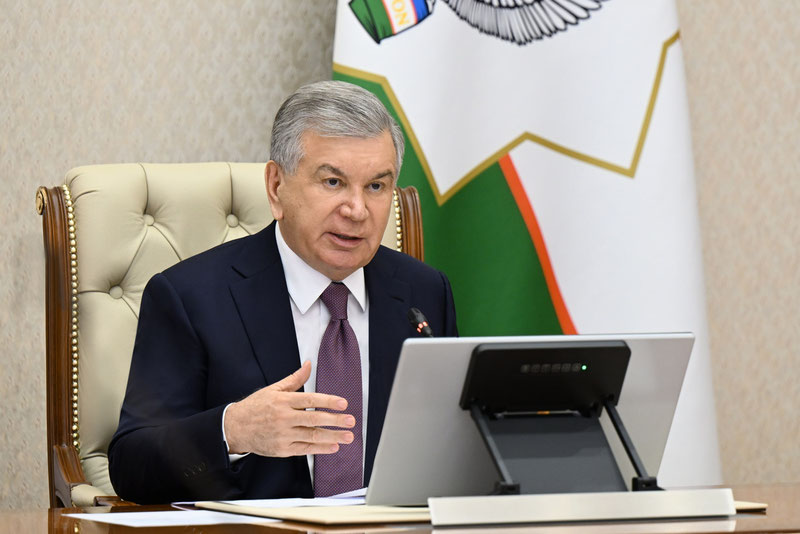
President Shavkat Mirziyoyev on May 26 reviewed a presentation on the development of transport infrastructure. It discussed strategic projects for expanding roads, aviation, logistics, and international transport corridors.
The "Tashkent — Samarkand" road will be designed for a speed of 150 km/h
One of the largest projects in the presentation was the construction of the alternative "Tashkent — Samarkand" highway. This road, 282 kilometers long, will connect the Tashkent, Syrdarya, Jizzakh, and Samarkand regions.
It was reported that the highway will be built to Category I-a specifications with a cement-concrete pavement. There will be three traffic lanes in each direction, with a design speed of 150 kilometers per hour.
Within the framework of the project:
— 12 transport interchanges;
— 60 tunnel-type crossings;
— 91 bridges;
— 16 overpasses;
— 258 drainage structures will be built.
Furthermore, an intelligent transport system, weight measurement complexes, and 12 modern terminals are planned to be established.
The president instructed those responsible to accelerate negotiations with investors and begin construction work within a short timeframe.
The number of airports in Uzbekistan has reached 18
The presentation also paid special attention to ongoing reforms in the aviation sector.
Currently, 7 international airports in the country are undergoing reconstruction. Additionally, new airports are being built in Muynak, Kokand, Zomin, Shahrisabz, Sariosiyo, and Sokh, bringing the total number of airports to 18.
Navoi International Airport will be transformed into a major aviation hub
The presentation also outlined plans for developing Navoi International Airport. From now on, the airport's operations will be organized based on project management principles, and it will be granted commercial independence.
Specifically, the airport will have the right to independently conclude contracts with local and foreign airlines and conduct negotiations on cargo and passenger transportation, as well as transit and technical landings.
According to the plan, by 2030:
— the number of flights will increase 2.3 times, reaching 7,000 per year;
— passenger traffic will reach 150,000;
— cargo transportation volume will reach 45,000 tons.
Additionally, a "porto-franco" free zone will be established on the airport grounds, providing technical and commercial services for aircraft.
The New Tashkent Airport will serve 20 million passengers per year
The president was also briefed on the construction of the New Tashkent International Airport.
According to the project, the new airport will have a capacity to serve 20 million passengers per year. The terminal area will be 208,400 square meters.
Within the complex:
— parking spaces for 169 aircraft;
— 2 runways, each 4 kilometers long, will be built.
To date, environmental and social impact assessments have been conducted based on the requirements of international financial institutions. Currently, work on relocating utility networks has begun, and negotiations with contractor organizations are ongoing.
Aviation fuel production will be increased to 600,000 tons
The presentation also discussed the issue of aviation fuel supply for civil aviation.
It was reported that the total capacity of fuel filling complexes at airports currently stands at 49,000 tons. Plans are in place to increase the volume of local aviation fuel production to 600,000 tons per year and storage capacity to 80,000 tons by 2030.
To this end, new storage facilities will be built at the Navoi, Andijan, Bukhara, Urgench, and New Tashkent international airports.
At the same time, the task has been set to align fuel storage and refueling processes with international standards, digitize all management systems, and strengthen state control.
At the conclusion of the meeting, the head of state emphasized that economic efficiency, construction quality, safety, and convenience for the population must be the main criteria in developing transport infrastructure.