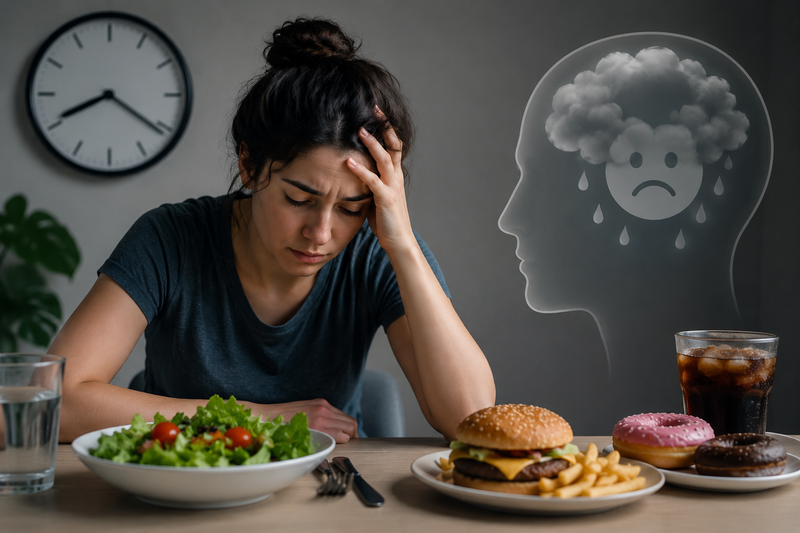
According to the study, people who frequently skip main meals are significantly more likely to exhibit symptoms of depression.
The study was conducted by scientists at the Holy Mary University Hospital in Seoul, and the results were published in the Journal of Affective Disorders.
More than 21,000 people participated
Scientists analyzed data on the eating patterns and mental state of 21,568 adults between 2014 and 2022.
During the study, participants' regularity of consuming breakfast, lunch, and dinner, dietary diversity, and symptoms of depression were examined.
Experts assessed main meals consumed fewer than five times per week as "irregular eating."
Risk of depression was 1.5 times higher
According to the study results, people with the most disrupted eating patterns were 1.55 times more likely to develop symptoms of depression compared to those who ate regularly.
Furthermore, the more disrupted the eating schedule, the greater the risk of low mood and worsening mental state.
Scientists noted that this effect was particularly pronounced in people with a monotonous diet.
Skipping breakfast is one of the most dangerous factors
The study authors paid special attention to the issue of breakfast.
Participants who regularly skipped breakfast experienced more severe symptoms of depression. In particular, people who both skipped breakfast and consumed a monotonous diet recorded the lowest mental state.
According to experts, breakfast activates the body's metabolism after the overnight fast. Skipping it can lead to sharp fluctuations in blood sugar levels, disruption of hormonal rhythms, and negative effects on emotions.
A varied diet may mitigate the negative impact
Another important aspect was identified in the study — a varied diet can partially mitigate the negative consequences of irregular eating.
Scientists explain this by the greater intake of vitamins, beneficial substances, and anti-inflammatory components into the body. Additionally, such eating habits may help maintain a healthy gut microbiome.
The study is not a definitive conclusion
However, scientists also emphasized that this study does not fully prove that irregular eating is the exact cause of depression.
This is because people with depression may also experience decreased appetite, loss of motivation, and disrupted meal times. Furthermore, the study did not account for factors such as sleep quality and stress levels.
Nevertheless, experts emphasize that not only what you eat, but also when you eat, is important for mental health.