Specifically, events aimed at studying the systems of arms trafficking, their accounting, and control were carried out by an interdepartmental working group established under the leadership of the Agency. During this process, it is planned to thoroughly study the activities of a number of ministries, agencies, and relevant facilities.
In particular, at the first stage, the activities of a number of departments within the system of the Ministry of Internal Affairs of the Republic of Uzbekistan were analyzed.
As a result of rapid and preventive measures carried out by internal affairs bodies, a total of 487 cases have been identified since the beginning of the current year. Of these, 227 were detected by law enforcement agencies, and 260 were voluntarily surrendered by citizens. During the conducted measures, the following items were identified and formalized according to the established procedure: 255 various types of firearms, 2,841 rounds of ammunition, 57 main parts of weapons, 485.7 grams of explosive substance.
During the conducted studies, the procedure for forming and managing reports on firearms at the Main Center for Legal Statistics, as well as the capabilities of the information databases used in this direction, were analyzed. The analyses showed that managing information related to arms trafficking through a unified digital system and integrating the information databases of various agencies provides an opportunity to further increase the efficiency of control.
At the Main Expert-Criminalistics Center, the procedure for conducting ballistic examinations of firearms, the management of the State Ballistics Library, and the capabilities of the automated ballistic identification system were analyzed. It was emphasized that continuously enriching the ballistic database is of great importance in the process of rapid detection of crimes and identification of weapons.
At the Department of Public Safety, in the Control and Licensing Division of the Public Order Service, the practice of licensing and permitting arms trafficking, as well as the control system being implemented over civilian and service weapons trafficking, were studied. According to experts, the gradual digitalization of licensing processes and increasing the share of electronic services ensures the transparency of the control system while creating convenience for citizens.
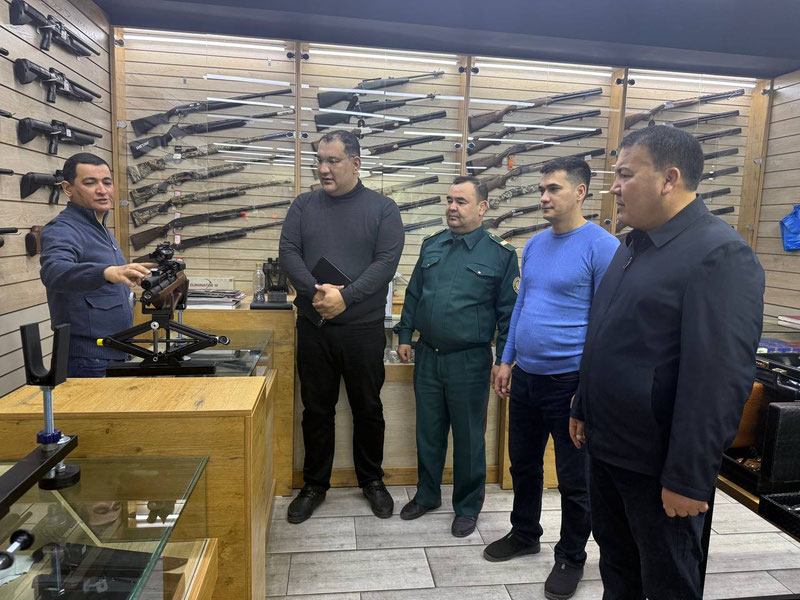
Furthermore, the working group also studied the activities of shops specializing in the trade of weapons and ammunition located in the capital's territory. The procedure for product accounting, storage conditions, and compliance with current legislative requirements were analyzed. It was emphasized that implementing systems for electronic product accounting and digital monitoring of trade processes in this field would serve to further increase control efficiency.
The results of the studies showed the necessity of further improving existing systems in the field, strengthening information exchange between state bodies, and digitalizing control processes. In this regard, proposals and recommendations aimed at strengthening control over arms trafficking, integrating information systems, and implementing modern digital solutions were developed.