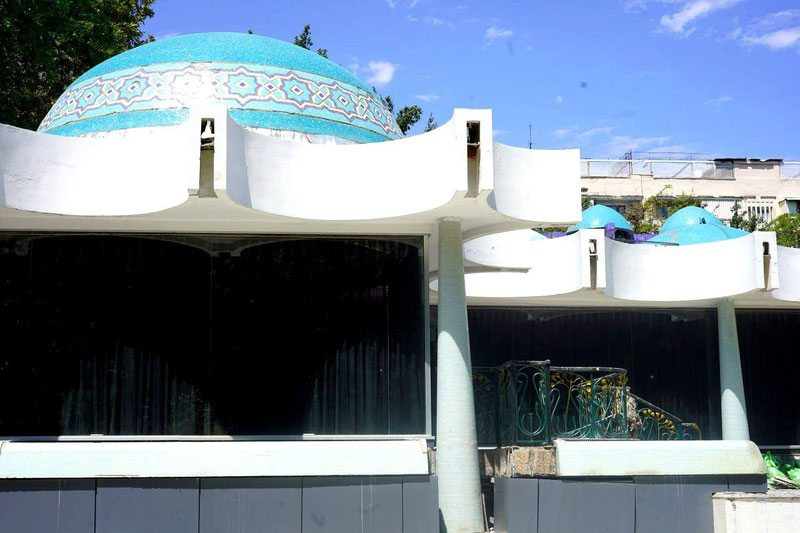
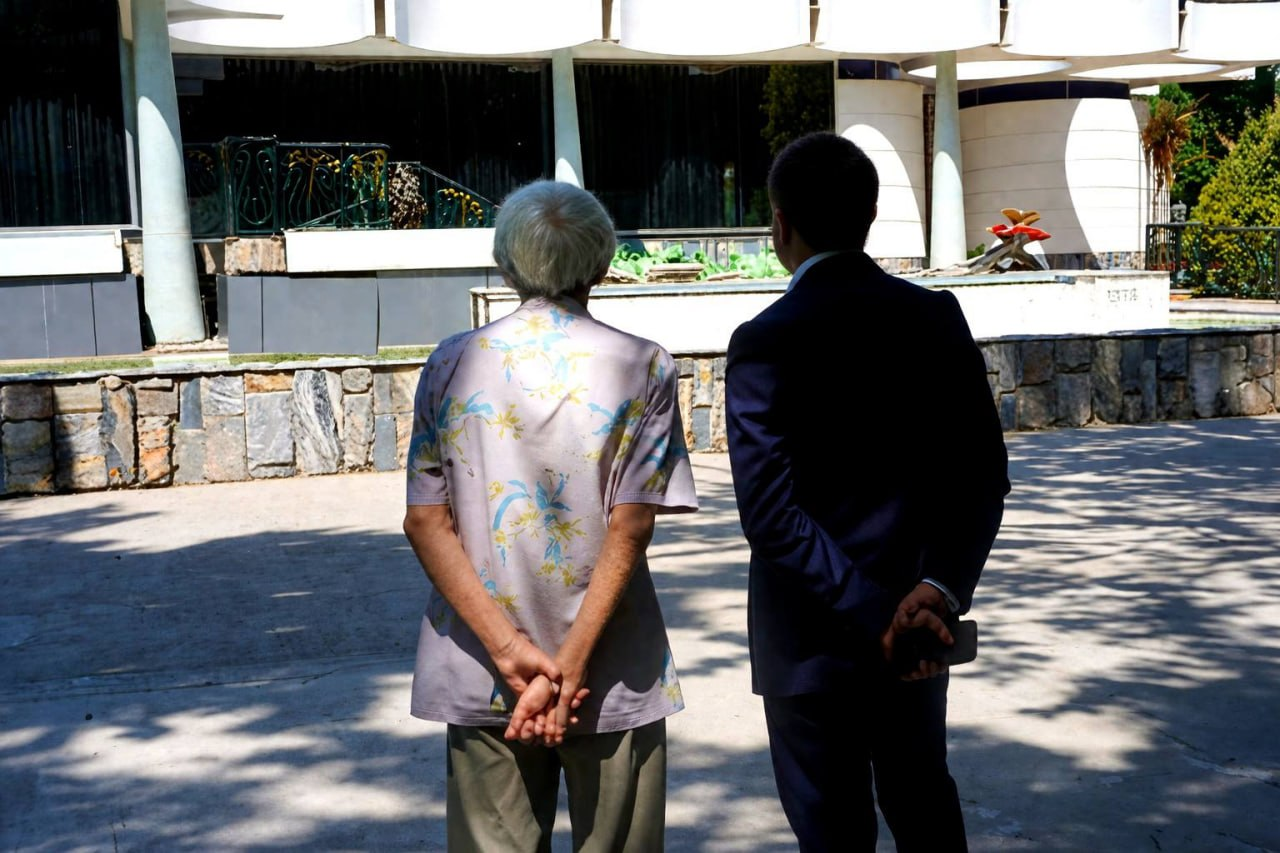
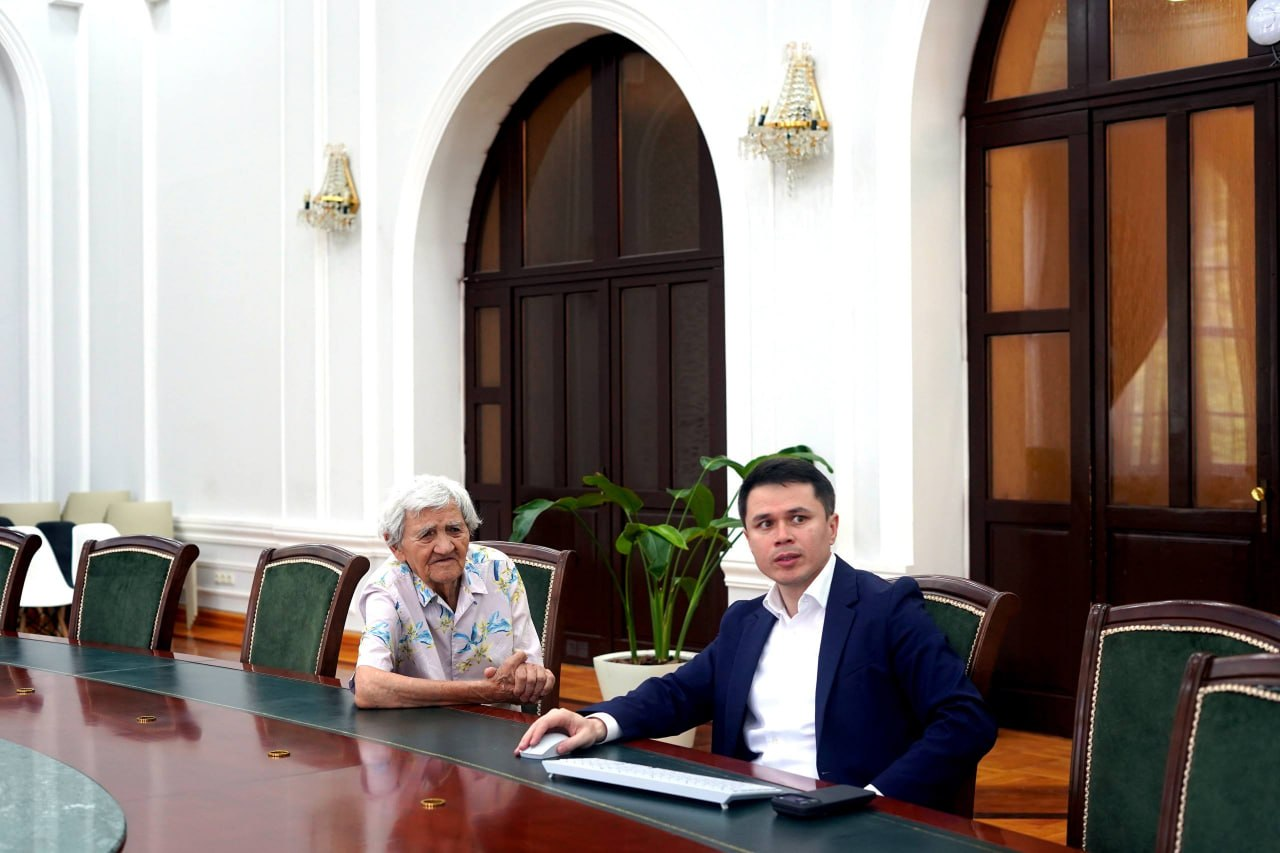
Today, the First Deputy Director of the Cultural Heritage Agency, Elmurod Nazhimov, together with the author of the "Blue Domes" cafe — renowned architect Vil Muratov, inspected the cultural heritage site.
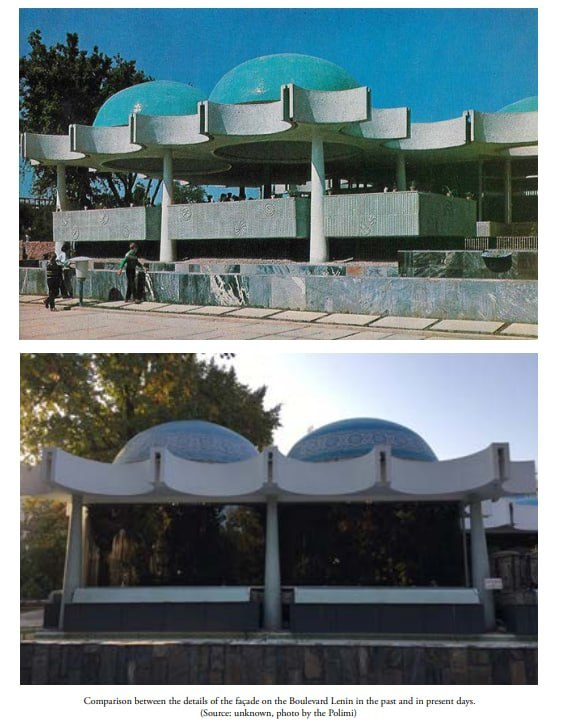
Built between 1968 and 1970, the "Blue Domes" is not only a unique monument of modernist architecture but also one of the symbols of the city of Tashkent. In 2019, by a decision of the Cabinet of Ministers, this site was included in the National List of Immovable Tangible Cultural Heritage Sites.
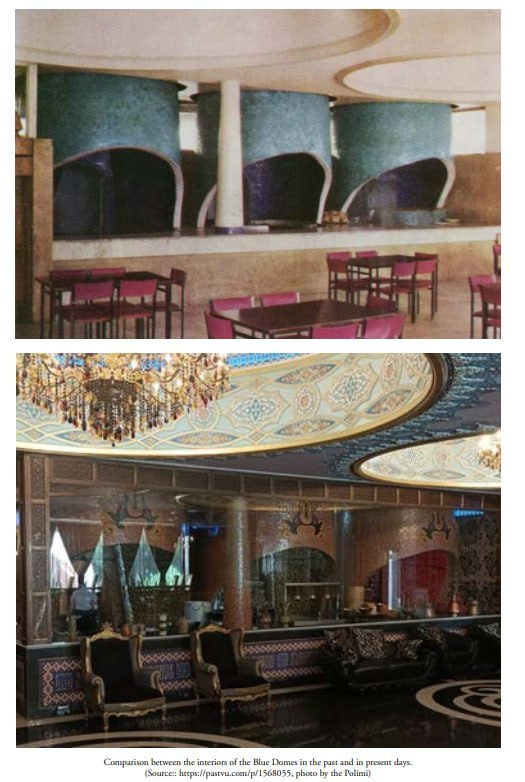
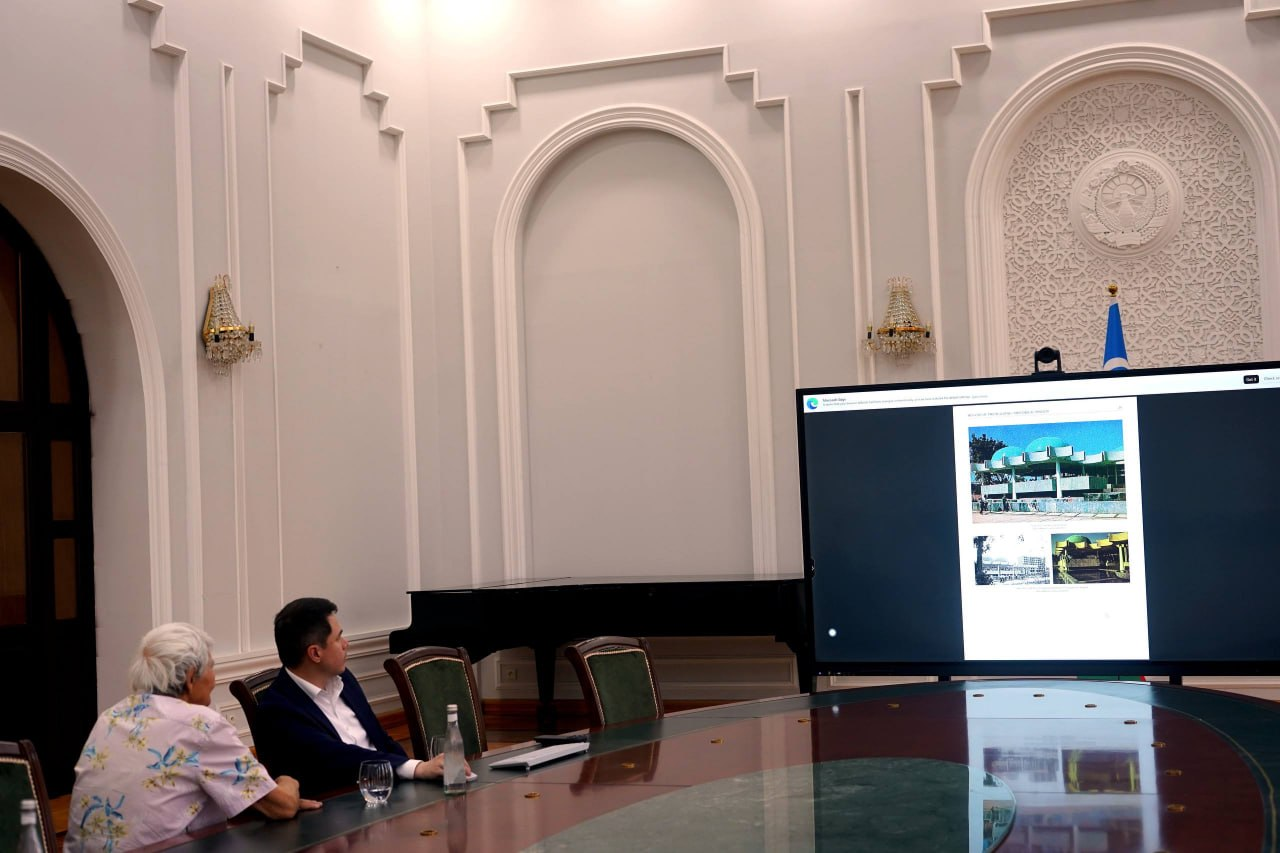
During the repair work carried out in recent years, the mosaic decorations of the site were altered, which affected its original architectural and artistic appearance. Currently, with the participation of the site's author, architect Vil Muratov, scientific study and restoration work to recover the original appearance of the "Blue Domes" has begun.
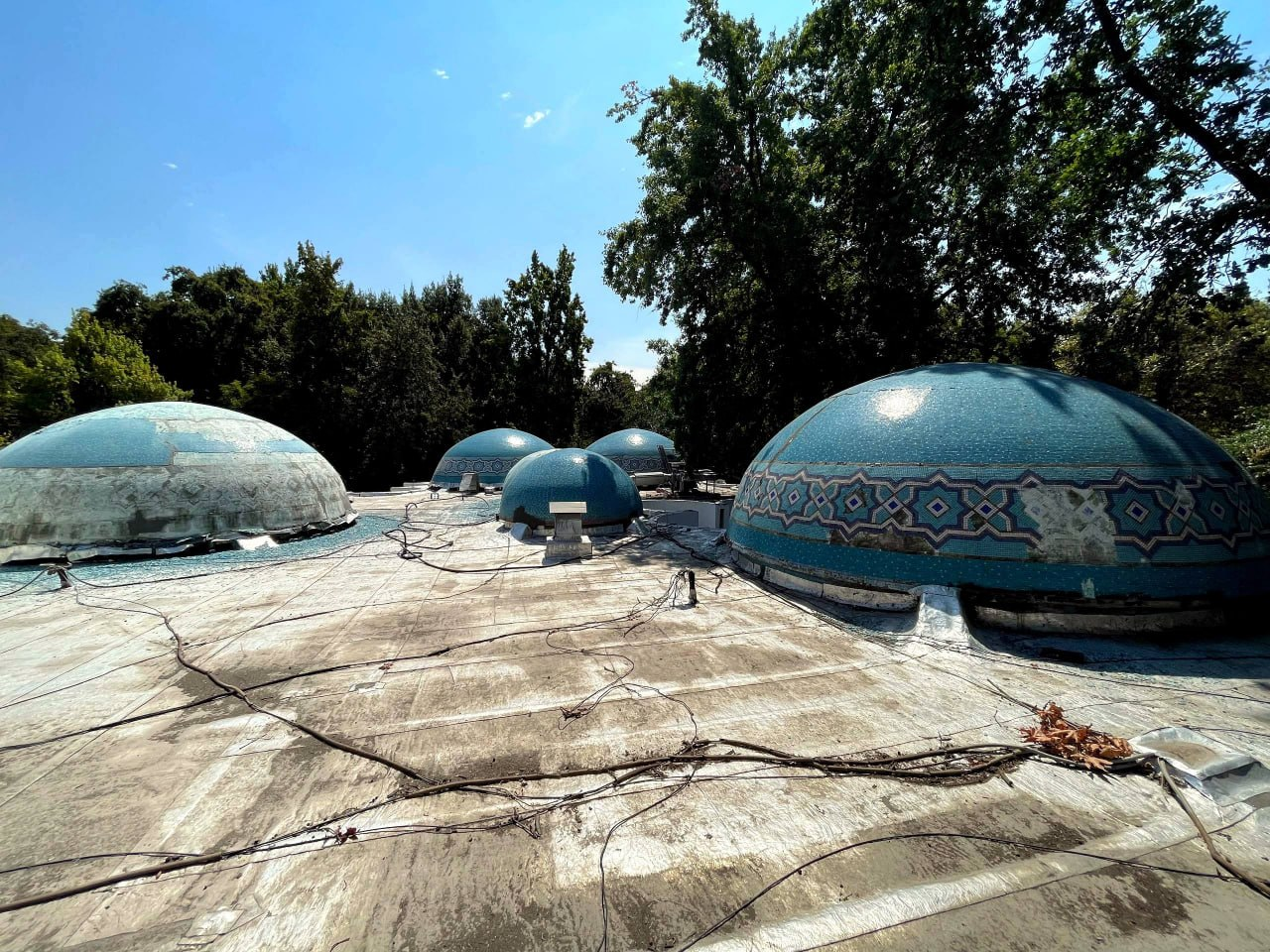
A special working group will be established to implement the project for the restoration of the site and the recovery of its original architectural appearance. It will include leading international experts in the field of modernist architecture, as well as prominent local architects, art historians, and restoration specialists.
Ekaterina Golovatyuk, Boris Chukhovich, and Fatima Abdurakhmanova will also participate in the work on the project. Combining the experience of international and local specialists, the working group will develop scientifically based solutions for the restoration and recovery of the site's original architectural and artistic appearance.
The main goal of the project is to preserve the historical, architectural, and artistic value of the "Blue Domes," to restore its original elements, and to pass this unique monument on to future generations.
The unique architectural solution of the site, which harmoniously combines national architectural traditions and the expressive principles of modernism, holds significant importance in the history of Uzbekistan's architecture.
The commencement of the restoration work on the "Blue Domes" is not merely about restoring a single historical building. It is an important step towards preserving, studying, and popularizing Uzbekistan's 20th-century architectural heritage, as well as presenting it on the international stage.