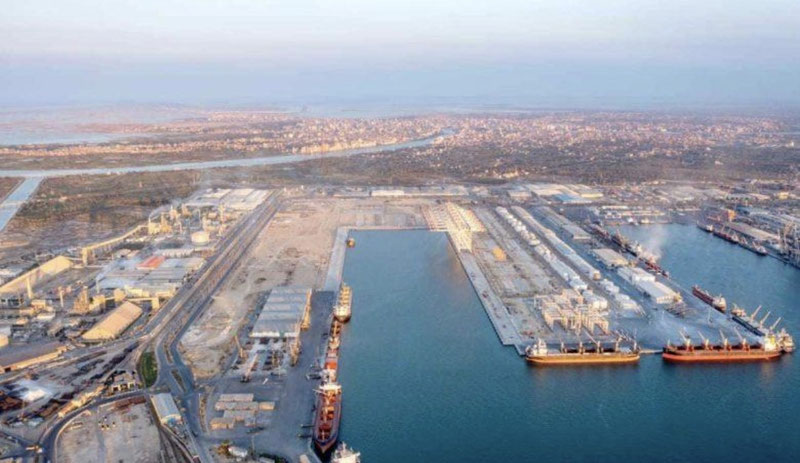
Concerns over the security of the Suez Canal and the region's energy routes have intensified following a drone attack that caused fires on two ships at Egypt's Damietta port.
According to the Egyptian government, on July 29, an unknown drone attacked two ships at Damietta port. The incident occurred near the strategically important Suez Canal, which connects the Mediterranean Sea and the Red Sea.
According to sources, the drone first struck the gas storage tanker Energos Winter, owned by the United States. The fire later spread to a second vessel.
No party has yet claimed responsibility for the attack. Iranian Foreign Minister Abbas Araghchi, however, strongly denied Tehran's involvement in the incident.
"Egypt is an important friend and partner in the region, and its security is very important to us. We must all remain vigilant against Israel's plots and false operations aimed at undermining peace in the region," Araghchi said on social media.
It is worth recalling that on July 20, the Houthis, backed by Iran, declared a naval blockade against Saudi Arabia, opening a new front in the conflict. Following the latest attacks, London's marine insurance market expanded the "high risk" area in the Red Sea, adding coastal areas near Saudi Arabian ports to the list.
Additionally, Saudi Arabia announced a plan to form a multinational naval defense coalition in the Red Sea to protect international shipping lanes and energy supply routes.
According to energy analysts, the drone attack in Egyptian waters has further heightened concerns about the security of the Suez Canal and the SUMED oil pipeline. These two routes have become increasingly important for Saudi oil exports since the start of the war with Iran.
According to data from Kpler, an increasing share of Saudi oil is being redirected northward through the Red Sea—toward the Suez Canal and the SUMED pipeline. However, this is extending shipping distances for buyers in Asia by going around Africa.
Meanwhile, according to Reuters sources, Oman has presented to Iran a plan for managing the Strait of Hormuz that is supported by the Persian Gulf states. Although Tehran officially rejected the proposal, Iranian Foreign Ministry spokesman Ismail Baqaei stated that negotiations with Oman on the matter are ongoing.
On July 29, Saudi Arabia also announced that, in cooperation with the United States, it had struck Iran-aligned armed groups in eastern Iraq. Riyadh described the action as a response to drone attacks launched from Iraqi territory against Saudi oil facilities.
Iraqi government representative Haider al-Aboudi, however, stated that Baghdad had not consented to these strikes and had not been informed of them in advance.
According to analysts, the recent events in Iraq and Egypt are increasing the risk of more countries being drawn into the conflict in the Middle East.