During operational measures conducted in the Gijduvan district of Bukhara region and the Nukus district of the Republic of Karakalpakstan, individuals engaged in the preparation and sale of counterfeit and illegal medicines were exposed. This was reported by the State Security Service.
According to the information, during an operational measure carried out in cooperation with the Department of the State Security Service for Bukhara region and the Economic Crimes Department, a pharmacy, a residential apartment, and a car belonging to an entrepreneur living in the Gijduvan district were inspected.
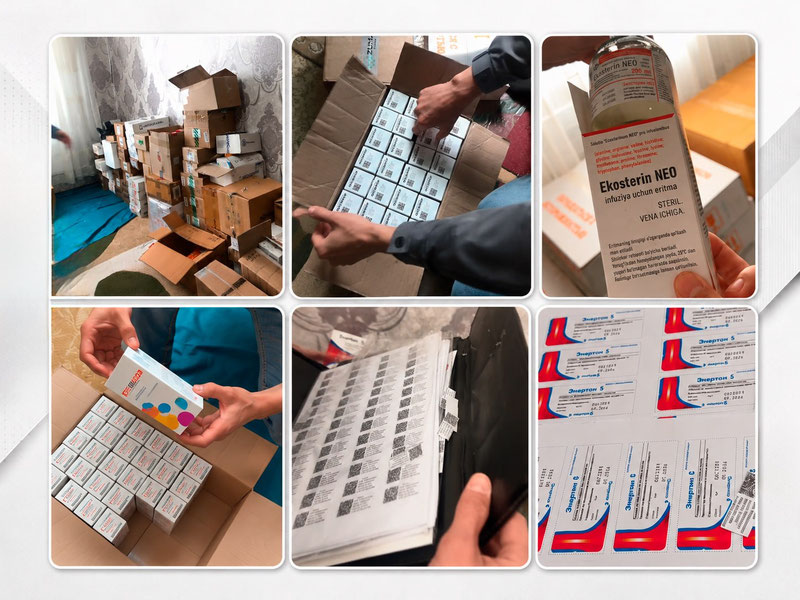
During the inspection, it was found that the entrepreneur had organized a secret workshop in his home, producing counterfeit products by altering the labels and instructions of medicines.
During the operational measure, a total of 25,716 units of medicine in 111 types, along with empty boxes, labels, instructions, and other physical evidence, were seized.
According to the conclusion of the state institution "Center for Pharmaceutical Product Safety," 30 types of the confiscated medicines were not registered in the state registry, and conformity certificates had not been processed for another 50 types.
Additionally, in another operational measure conducted in the Gijduvan district, the head of an LLC engaged in pharmaceutical activities was caught selling 16 units of the medicine "Octagam," which were not registered in the state registry and had no quality certificate, to a buyer for 5,600 US dollars.
When inspecting the pharmacy belonging to him, a total of 32,094 units of medicine in 109 types, lacking quality certificates, were documented and seized.
During an operational measure conducted in the Republic of Karakalpakstan, officers of the State Security Service and Customs authorities found that a citizen born in 1989, living in the Nukus district, had organized an illegal warehouse in his home.
From this location, a total of 12,958 units of medicine in 65 types, as well as 2,410 barcodes and labels used for their packaging, were taken as physical evidence.
The conclusion of the state institution "Center for Pharmaceutical Product Safety" noted that these medicines were stored without compliance with established storage requirements, and that the expiration dates of 16 types had expired.
Currently, criminal cases have been initiated against the violators in all three incidents, and investigative actions are being conducted.