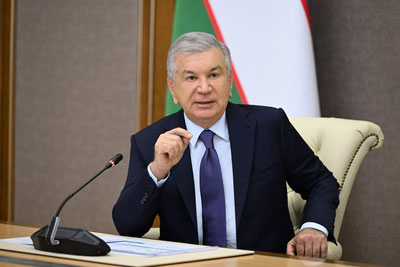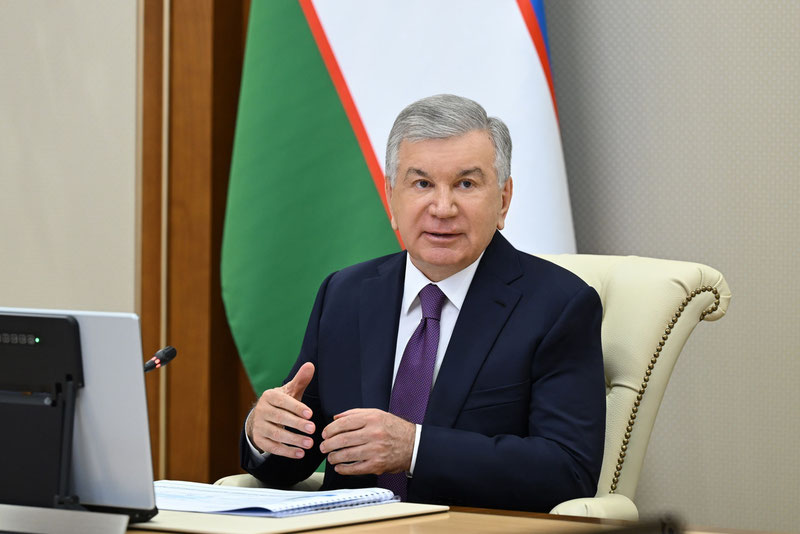
President Shavkat Mirziyoyev reviewed a presentation on introducing a unified integrated digital platform for public administration, developing the startup ecosystem, and improving the business environment in the telecommunications sector. This was reported by the President’s press service.
The presentation noted that digital government services have expanded significantly in recent years. As a result, Uzbekistan has moved up 24 positions in the UN’s E-Government Development Index. The goal is now to bring the country into the world’s top 30 strongest nations in this ranking by 2030.
It was reported that by the end of this year, the number of digital government services is expected to reach 880, and the number of users is expected to reach 15.5 million. For comparison, in 2024 these figures were 525 services and 4 million users, respectively.
In this regard, a proposal was made to gradually introduce a unified integrated digital platform for public administration. It will combine data on regional economies, investments, ecology, security, social conditions in neighborhoods, spatial information, and other data. Artificial intelligence technologies are intended to enable early detection of problems, monitor the implementation of decisions, and increase management efficiency.
The President emphasized the need to launch this system on a trial basis in the city of Tashkent this year, and to implement it in all regions of the country starting next year.
The presentation also discussed plans to create a unified national classification system for goods and services, launch a national navigation platform, increase IT exports to $5 billion by 2030, establish 5,000 startups, and attract $2 billion in investment.
Additionally, proposals were made to launch the "Talent Hub" program, extend tax incentives for IT Park residents until 2040, expand the "IT visa" and "Zero Risk" programs, and introduce new mechanisms to support IT companies.
The meeting also paid special attention to the development of the telecommunications sector. In particular, proposals were made to simplify licensing processes, equip multi-story buildings with high-speed internet infrastructure, and support entrepreneurs starting in the sector with preferential loans.
The head of state approved the presented proposals and gave relevant instructions to those responsible for integrating information systems of government agencies, improving the quality of digital services, strengthening cybersecurity and personal data protection, and creating more favorable conditions for the private sector.