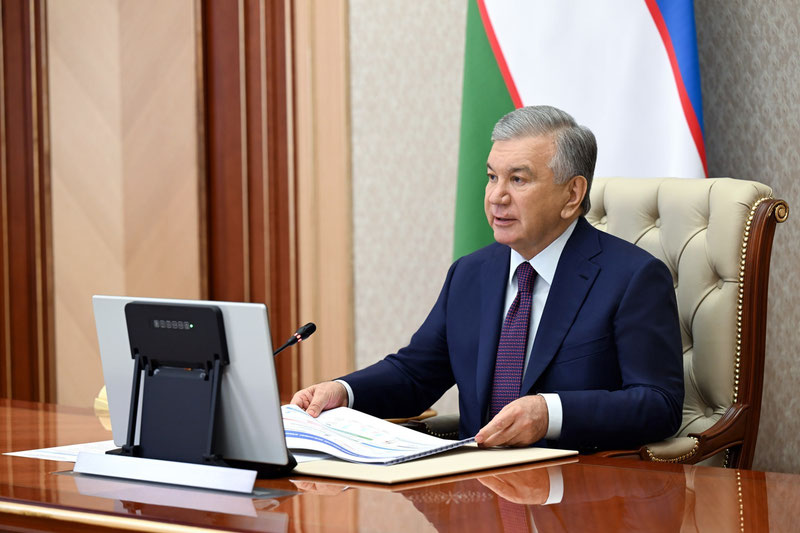
In recent years, the volume of investments directed to this sector has increased tenfold, reaching 2.7 billion dollars. As a result, the level of the population's access to centralized drinking water has risen from 63 percent in 2017 to nearly 83 percent.
It is noted that in recent years, 7.7 million people have been provided with centralized drinking water for the first time, and the water supply for 11 million people has been improved. Additionally, 1.1 million people have been connected to the sewerage system.
During this period, 39 thousand kilometers of drinking water networks and 3.2 thousand kilometers of wastewater networks were constructed and reconstructed. 3.4 thousand drinking water facilities and 295 wastewater facilities and pumping stations were built or renovated.
In the coming years, it is planned to increase drinking water supply coverage to 90 percent and sewerage service coverage in cities to 80 percent. For this purpose, an additional 1.3 billion dollars in investment is expected to be attracted.
The presentation also discussed some problems in the sector. In particular, 107 billion soums have been allocated to eliminate problems in the sewerage system in Andijan city. In the Sergeli district, modern filters are being installed to prevent the spread of unpleasant odors.
Within the framework of the project to supply the population of Surkhandarya with drinking water from the Tupolang reservoir, a network has been laid to the city of Termez. By the end of the year, it is planned to supply water to the Sherobod, Muzrabot, Angor, and Jarkurgan districts as well.
Furthermore, the task has been set to bring centralized drinking water to 513 mahallas and improve the quality of water supply in another 3,000 mahallas.
In order to deliver drinking water directly to households, it is planned to replace 232 thousand water columns with networks running directly to homes.
By the end of the year, projects worth a total of 600 million dollars will be implemented. Within their scope, 1.6 thousand kilometers of drinking water and 387 kilometers of sewerage networks, as well as 80 water and 29 wastewater facilities, will be built.
As a result, 310 thousand residents in 107 mahallas will be provided with centralized drinking water for the first time. For 2.5 million residents in 453 mahallas, the water supply will be improved.
In the Kashkadarya region, the task has been given to accelerate the project of supplying drinking water from the Hisorak reservoir. The project, worth 217 million dollars, is expected to improve the water supply for 1.1 million people in the Kamashi, Guzor, and Karshi districts, as well as the city of Karshi.
The President also focused on the issue of ensuring the financial stability of water supply enterprises. It was noted that the current tariffs do not fully cover the real cost of services, and sharp differences across regions negatively affect the investment attractiveness of the sector.
In this regard, it was proposed to separate the functions of drinking water production and delivery to consumers, and to establish a Main Water Supply Enterprise. This enterprise is planned to supply drinking water to regional enterprises based on a single wholesale tariff.
Additionally, the task was set to establish an Interdepartmental Tariff Commission to determine tariffs based on transparent and economically justified criteria, and to introduce a single tariff for budget organizations from April 1, 2027.
Within the framework of digitalization of the sector, it was decided to transfer all settlements with consumers to an online system, install modern water meters, and create a digital map of water facilities and networks.
Through the widespread introduction of "SCADA", "GIS", telemetry, and unified billing systems, the task was set to reduce water losses from 35 percent to 25 percent.
Projects were also presented aimed at analyzing the operation of pumping equipment using artificial intelligence, early detection of accidents and water leaks, forecasting consumption volumes, and promptly processing citizens' appeals.
At the conclusion of the presentation, the President gave specific instructions to those responsible for the timely and quality implementation of projects, expanding service coverage, ensuring the financial stability of enterprises, and digitalizing the sector.