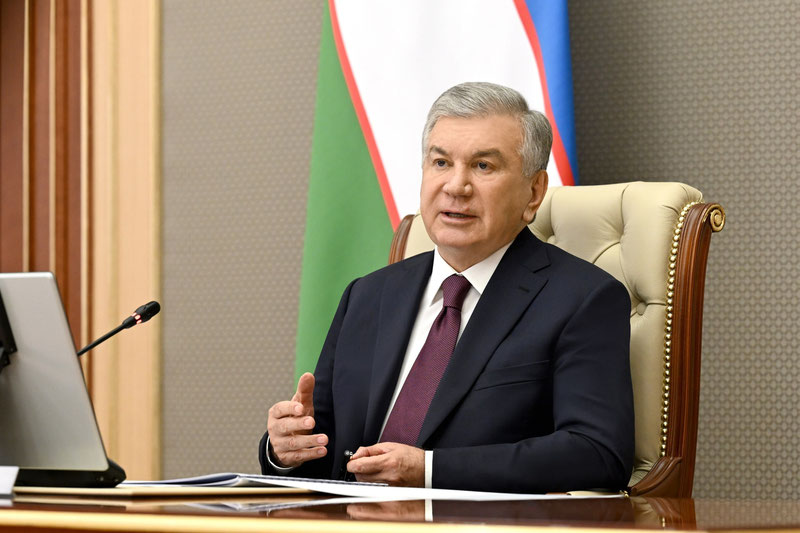
President Shavkat Mirziyoyev reviewed the presentation of the project for the modernization of the central boiler house in the city of Nukus based on cogeneration technologies.
Uninterrupted and high-quality supply of thermal energy to the population and social facilities during the autumn-winter season, as well as the introduction of energy-saving technologies in the sector, is considered one of the priority tasks.
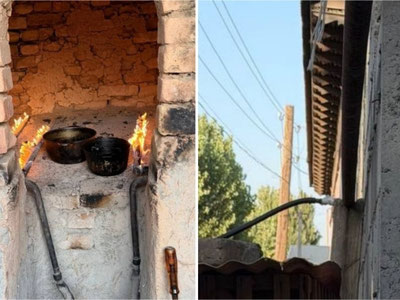
According to reports, currently 47 multi-story buildings in the city of Nukus are connected to the central heating system. Another 270 houses are heated through local heating systems. In the remaining multi-story buildings, households use various makeshift heating devices.
These methods not only lead to excessive energy consumption but also pose a certain risk to human health and safety.
The existing central boiler house in the city of Nukus was built in 1976 and currently mainly serves social facilities. Due to the moral and physical obsolescence of the boiler house equipment, its energy efficiency remains at a low level.
In the current system, approximately 153 cubic meters of natural gas and 30 kilowatt-hours of electricity are consumed to produce 1 gigacalorie of heat. The actual capacity of the boiler house is 1.6 gigacalories per hour.
The presentation considered the issue of modernizing this facility with modern cogeneration technologies on the basis of a public-private partnership.
Cogeneration technology allows for the simultaneous production of electrical and thermal energy from a single fuel source. This serves to efficiently use resources, reduce costs, and minimize the negative impact on the environment.
Within the framework of the project, a modern complex capable of producing 34.4 gigacalories of heat and 21.5 megawatts of electricity per hour will be built.
Additionally, 28 kilometers of heating networks will be constructed, and 189 individual heating points will be installed. The internal heating systems of multi-story buildings and social facilities will be restored.
In the first phase, approximately 6,000 apartments in 136 multi-story buildings, i.e., 23,000 residents, and 40 social facilities will be covered by centralized heat supply.
In subsequent phases, it is planned to connect all multi-story buildings and social facilities in the city of Nukus to a single centralized heating system.
Over 20 million US dollars in direct foreign investment will be attracted for the first phase of the project. The new complex is expected to be fully commissioned in February 2028.
As a result of the modernization, the efficiency coefficient of the boiler house will increase from 80 percent to 91 percent. The volume of heat production will increase significantly, and the capacity to generate up to 172 thousand megawatt-hours of electricity per year will be created.
At the same time, it is expected that 12.2 million cubic meters of natural gas will be saved per year, and the amount of harmful substances emitted into the atmosphere will decrease.
With the commissioning of the new complex, 19 new jobs will be created. Furthermore, the qualifications of industry specialists in the use of modern technologies will be improved.
President Shavkat Mirziyoyev emphasized the importance of ensuring sustainable, safe, and high-quality heat supply for the population during the project implementation, and of completing construction works on schedule and with high quality.
Relevant instructions were given to those responsible for effectively organizing the project execution and timely resolving infrastructure issues.
Also, based on the Nukus experience, the possibilities of modernizing boiler houses in the cities of Bukhara, Samarkand, Urgench, and Zarafshan based on cogeneration and trigeneration technologies will be considered in the future.