On the eve of the parliamentary elections in Israel, scheduled for October 27 this year, a new Jewish-Arab political party has been established. The party's initiators aim to actively engage young voters in political processes. However, according to analysts, this political force could lead to further fragmentation of the Arab electorate's votes and weaken the opposition's chances against the right-wing coalition led by Prime Minister Benjamin Netanyahu. Reuters reported this.
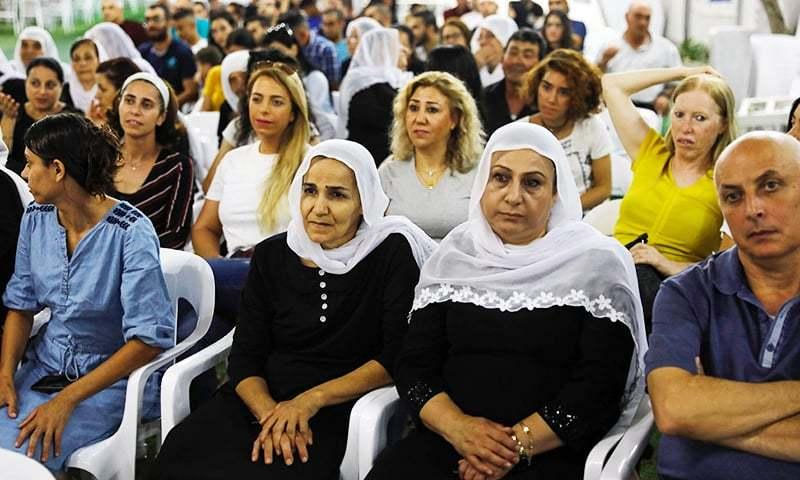
Nearly one-fifth of Israel's population consists of Arabs of Palestinian origin who hold citizenship. However, they traditionally participate in elections less frequently than the Jewish population.
It was reported that the new party, named "A Place for All of Us," was founded by leaders of the left-wing movement "Standing Together." The political force, which began its activities in June, plans to participate in the October parliamentary elections.
This will be the first nationwide parliamentary election held after the attack by Hamas on October 7, 2023, and the subsequent Gaza war. The new party aims to replace the current right-wing government by strengthening solidarity between Jews and Arabs in the country.
According to party co-leader Alon-Lee Green, the main focus is on young people who feel excluded from the political system and did not vote in previous elections.
Representatives of the Arab community in Israel have long emphasized that unequal treatment persists. They note that during the current government, state funding for Arab areas has been insufficient, and the number of violent crimes has reached record levels.
In the 2022 parliamentary elections, 53.2% of Arab voters cast ballots, while among Jewish voters, the figure was nearly 75%. Analysts note that this disparity contributed to Benjamin Netanyahu's return to power.
Currently, four main Arab political parties are working to form an alliance again to consolidate the votes of Arab voters. According to Israeli law, a party needs at least 3.25% of the vote to enter parliament.
Experts say that if the new party fails to cross this electoral threshold, the votes cast for it will effectively have no impact on Arab representation in parliament and may be considered lost. Arik Rudnitsky, an expert at the Israel Democracy Institute, expressed this view.
Alon-Lee Green emphasized that the party's goal is not to divide the existing electorate but to attract new voters who have not voted before into the political process. At the same time, he stated that the party is discussing possibilities for cooperation with other political forces and is considering the option of not participating in the election if there is no chance of crossing the threshold.
Meanwhile, leaders of Arab political parties say they do not rate the new party's chances of gaining seats in parliament highly. Currently, Arab parties hold 10 of the 120 seats in the Knesset. They achieved their best results when running on a single list in 2015 and 2020. This time, only three out of four parties have agreed to unite. Ta'al party leader Ahmad Tibi stressed that the main task remains uniting the Arab political forces around a single list.