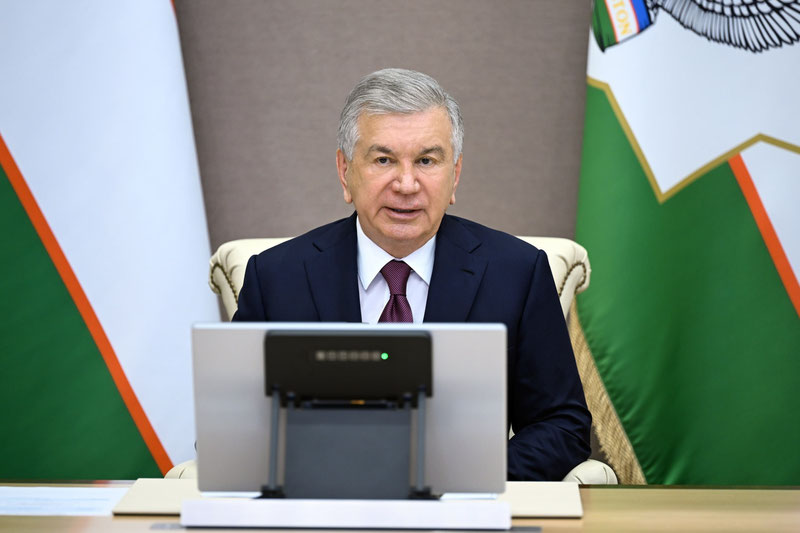
In Uzbekistan, new proposals were considered to improve the remuneration system for state civil servants. A presentation was made to President Shavkat Mirziyoyev on this matter.
It was reported that in recent years, a number of reforms have been implemented to improve the system of selecting, recruiting, and motivating personnel in public service.
Also, a separate law was adopted that defines the rights, obligations, and basic principles of activity of state civil servants. The number of management staff positions in state bodies was reduced from 73,000 in 2016 to 54,000.
During the presentation, some problems in the current remuneration system were analyzed. It was noted that currently, the share of the basic salary in the wages of state employees does not exceed 15 percent.
Up to 70 percent of the wage fund is formed through various allowances, bonuses, and incentive payments that are not directly linked to the employee's specific results.
This is causing significant differences in pay among employees working in the same position and performing similar tasks. It was noted that the salaries of employees in regional divisions of some ministries and agencies do not fully comply with the principle of equality when compared with holders of similar positions in khokimiyats (local administrations).
It was also said that there is no single legal document regulating the remuneration of state employees. Currently, more than 50 regulatory documents concerning the terms of remuneration are in force in various state bodies.
In this regard, it was proposed to introduce a unified, transparent, and results-based remuneration system for state civil servants.
The new system is planned to cover 54,000 state employees. According to it, state bodies will be divided into national, republican, regional, and district/city levels. Employees will be divided into administrative management, core, and support groups depending on their functions.
Based on international experience, it was proposed to introduce a new salary scale consisting of 11 grades and 6 steps. Instead of the many existing allowances and bonuses, three main incentive payments will be established.
In particular, it is envisaged that allowances will be paid based on the employee's level of qualification, performance of functional duties, discipline, initiative, and key performance indicators (KPI).
In addition, it is proposed to give bonus payments at the end of the reporting period to employees who have completed important and complex tasks, introduced innovative approaches, and achieved high results.
It will be established that the salaries of employees of regional departments should not exceed the salaries of similar positions in the relevant khokimiyats. In districts and cities, the population size and specific characteristics of the territory will be taken into account when determining staffing positions and salary amounts.
Under the new system, every state employee will be able to know in advance how their salary is formed and for which results they will receive an allowance or bonus.
President Shavkat Mirziyoyev emphasized the importance of ensuring fairness and transparency in the remuneration system and linking salaries to the employee's qualifications, responsibility, and achieved results.
It was also noted that bonus payments will be determined on the basis of specific criteria such as employees' mastery of modern information technologies, including knowledge and skills in the field of artificial intelligence, improvement of qualifications, and professional development.