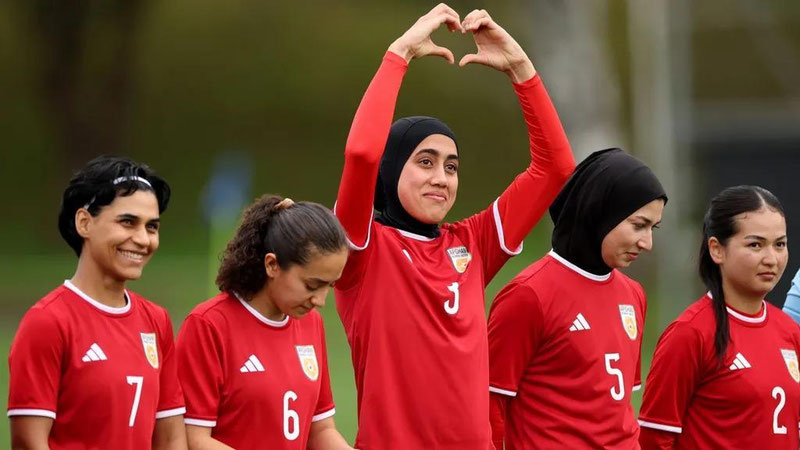
After the Taliban came to power, women's sport in the country was almost wiped out. Now, the Afghanistan women's national football team has reunited in New Zealand after nearly a five-year break and has taken its first step on the road back to the international stage. The BBC reported this.
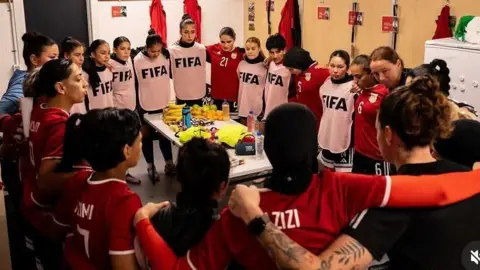
According to reports, the team has come to New Zealand to play two unofficial friendly matches and take part in a training camp. This is the players' first gathering since the International Football Federation (FIFA) decision in April this year gave them the right to compete in official competitions under the name of Afghanistan in the future.
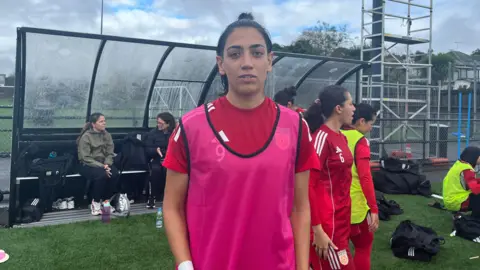
Previously, the women's national team required the consent of the Afghanistan Football Federation to participate in international competitions. But after the Taliban seized power in August 2021, severe restrictions were introduced for women and girls in the country. They were deprived of secondary and higher education, many professions, and the right to participate in organized sports.
The Afghanistan women's national team was established in 2007, and after the Taliban returned to power, its members were evacuated to Australia, the United Kingdom, Portugal and other countries. Later, as a result of years of efforts, a team called "Afghan Women United" was formed from refugee footballers. The FIFA decision opened up the opportunity for them to participate in the Olympic Games and World Cup qualifying rounds.
According to one of the team's players, Manoj Noori, she grew up playing football with boys on the streets of Kabul. Because her family, especially her brother, disapproved of this, she went out onto the pitch for a long time with her face covered by a mask.
"After I appeared on television, my brother found out everything. He was very angry. My mother cried and said that if I didn't give up football, the family would face financial difficulties," says Noori.
Despite this, she did not give up football. After the Taliban came to power, before fleeing to Australia, she buried all her medals and trophies in her home courtyard.
"One day I will return to my homeland and dig them up again," she says.
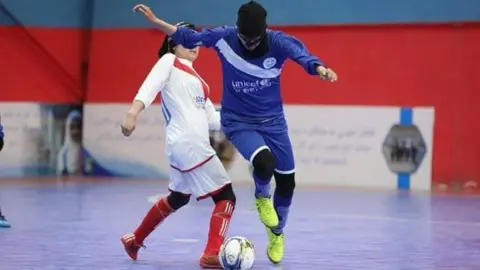
Another player, Mursal Sadat, stressed that if it had not been for football, she, like millions of Afghan girls, would have been left without the opportunity to get an education and choose her own future.
Defender Najma Orafi recalls training in the city of Herat during her teenage years in heat above 45 degrees. According to her, girls were always given the most inconvenient training times. Nevertheless, her team won the national championship, and this victory changed attitudes towards women's football in Herat.
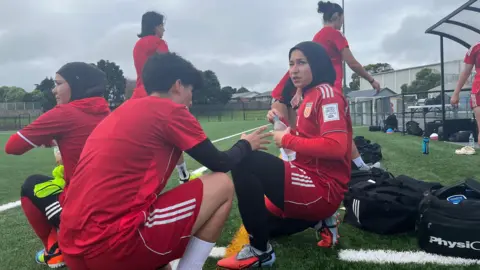
"Banners with our pictures were hung throughout the city. People began to be proud of us. More families allowed their daughters to play football," she says.
Today, Orafi lives in Doncaster, England, studies criminal law at college and continues her football career. However, she admits that she feels guilty thinking that millions of girls in Afghanistan are still deprived of freedom.
In the two friendly matches in New Zealand, the Afghanistan women's team lost to the Cook Islands national team, first 0:1 and then 0:3. But for the players, the most important result was not the score, but the opportunity to unite again under the flag of Afghanistan after years of silence.