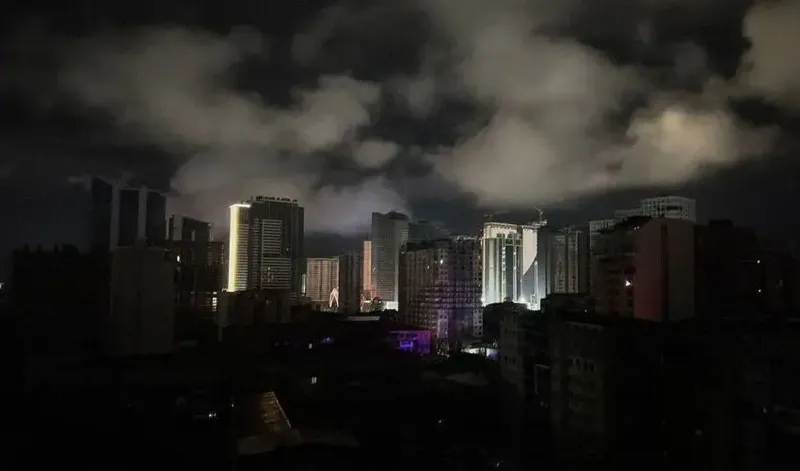
As a result, the capital Tbilisi and most regions of the country were left without electricity. This was reported by the First Channel of Georgia.
According to reports, a blackout that occurred around 20:15 local time caused the Tbilisi Metro to stop operating. Also, the movement of Georgian Railways trains was temporarily suspended.
According to eyewitnesses, in Tbilisi, power supply was also cut off in shops, restaurants, and other retail outlets. Some entrepreneurs used generators to continue their operations.
According to the Tbilisi Life Telegram channel, Georgy Pangani, a member of the Georgian National Commission for Energy and Water Supply Regulation, said that the power outage may be related to planned tests being conducted on the units of the Inguri Hydroelectric Power Station.
He noted that these tests were conducted after the accidents that occurred in July in order to identify weak points in the energy system. Currently, analytical work is underway to study the exact causes of the malfunction.
It is noted that this is the third major blackout in Georgia within the last two weeks.
Earlier, on July 25, metro traffic stopped in Tbilisi, and interruptions were also observed in water supply and internet services. A day before that, in addition to Tbilisi, the cities of Batumi, Kutaisi, Telavi, Borjomi, Bakuriani, and Zugdidi were also left without electricity.