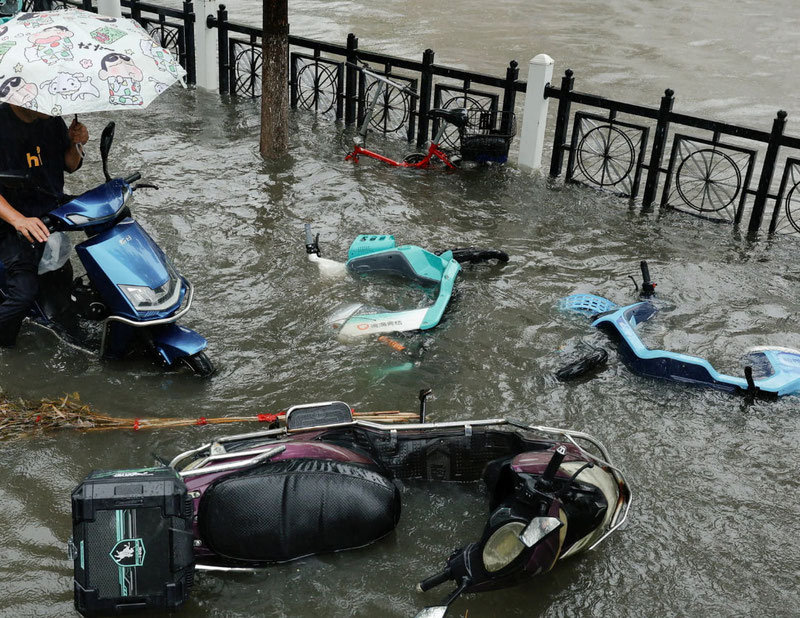
“Dolphin” typhoon remnants have caused heavy rains in Beijing, the capital of China, leading to the start of mass evacuations. Weather forecasters are warning that more than 150 millimeters of rain may fall on the city within the next 24 hours. In some areas, this figure is expected to exceed 200 millimeters. This is more than one-third of Beijing’s average annual rainfall.
According to reports, thousands of people living in areas with high risk of flooding and landslides have been moved to safe places.
On August 12, the second level of heavy rain warning — an orange signal — was declared in Beijing.
The city administration has temporarily closed hundreds of tourist attractions and campsites. More than 1,300 tourists have been evacuated or restricted from entering dangerous areas.
Additionally, nearly 5,000 elderly people residing in nursing homes have been moved to safe places. About 1,800 people living in mountainous and waterfront areas, as well as near construction sites, have also been evacuated.
Typhoon Dolphin initially reached China’s Zhejiang Province and caused heavy rainfall. Although the typhoon weakened and became a tropical depression, its residual moisture is causing heavy rains in northern and central China.
In Beijing, traffic has also been restricted due to the situation. Some bus routes have been suspended, and train services are experiencing delays.
In China’s Henan Province, the highest — red-level warning has also been declared due to the risk of heavy rainfall. In some areas, up to 350 millimeters of precipitation is expected.