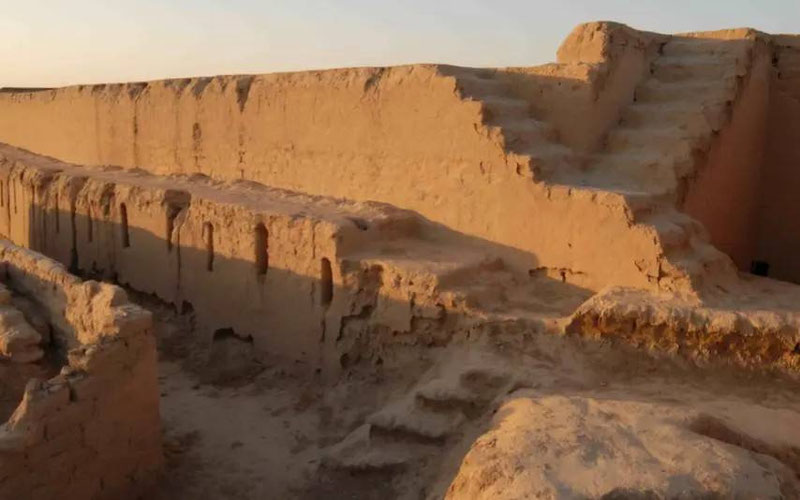
Specialists from the Academy of Sciences of Uzbekistan, in collaboration with international researchers, studied three ancient cocoon samples found at Sopollitepa. Scientific analyses showed that they belonged to the mulberry silkworm — Bombyx mori.
According to radiocarbon analysis, the samples date to 1940–1765 BC. This makes them one of the oldest reliable pieces of evidence indicating that silkworms were raised in Central Asia.
During the study, wood remains belonging to the mulberry tree were also identified at Sopollitepa. Mulberry leaves are the main food of the mulberry silkworm. The scientists noted that these pieces of evidence together suggest that already in the Bronze Age, the local population may have cultivated mulberry trees and mastered the technology of raising silkworms.
According to the scientists, this discovery may indicate that sericulture technology reached Central Asia nearly 2,000 years before the formation of the Great Silk Road. This provides a basis for reconsidering ideas about the spread of sericulture in the ancient world.
The research results were published in the journal Science Advances in 2026.