The Central Bank also noted that the geography of labor migration is expanding.
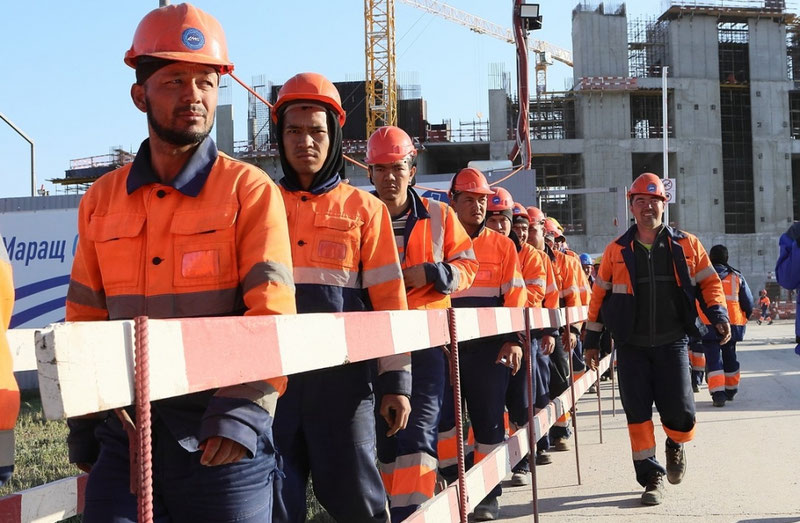
The largest number of Uzbeks working abroad is accounted for by Russia. There, 834,200 citizens of Uzbekistan are working.
Also, 258,000 Uzbeks are working in European countries, 84,400 in Kazakhstan, 72,100 in Turkey, and 46,400 in South Korea. Another 97,700 citizens are working in other countries.
Of the labor migrants, 398,900 or 28.6 percent are women. 402,100 or 28.9 percent account for young people.
It was noted that changes have also been observed in migration directions. While the migration flow to CIS countries decreased by 29 percent, an increase of 42 percent was recorded toward European countries, and 26 percent in East Asia.
According to the Central Bank, one of the main economic factors influencing labor migration is the difference between wages in Uzbekistan and foreign labor markets.
At the same time, since the beginning of 2026, 124,500 Uzbek citizens have been placed in high-paying jobs abroad.
In the future, foreign employers' demand for Uzbekistan's labor force is expected to increase in the fields of engineering, high-tech manufacturing, infrastructure construction, transport and logistics, agriculture, medicine, information technology, tourism, and services.