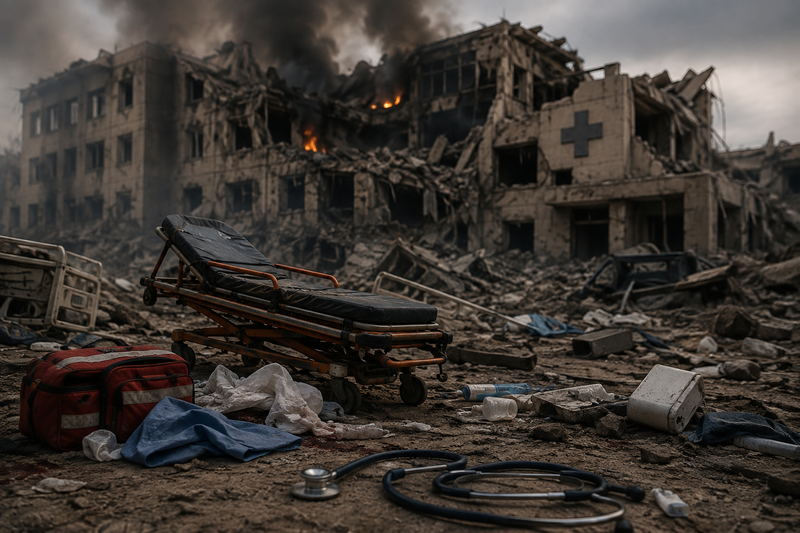
The World Health Organization recorded 914 attacks on medical facilities and personnel in 2026. As a result of these attacks, at least 911 people were killed and 1,486 people were injured. This means that on average, more than four attacks occurred every day.
According to Altaf Musani, WHO's Director of Emergency Situations and Humanitarian Operations, more than 10.4 thousand attacks against the healthcare system have been documented since 2018. Nearly 5.7 thousand people were killed and more than 8.5 thousand people were injured in these attacks.
In 2026, Ukraine, Lebanon, and the occupied Palestinian territory suffered the most from attacks on the medical system. In addition, attacks on healthcare facilities were also recorded in Myanmar, Iran, Sudan, the Democratic Republic of the Congo, South Sudan, Russia, Syria, and Nigeria.
WHO continues to document attacks on medical facilities in Lebanon, Israel, and Iran during conflicts in the Middle East.
According to the organization's data, the most common type of attack on medical facilities in 2026 was strikes involving heavy weapons.
WHO notes that the consequences of an attack on a medical facility are not limited to the patients and staff who were at the hospital at that time. After such attacks, patients may be deprived of necessary medical care, medical personnel may be unable to work, and the delivery of vital medicines and other medical supplies may cease.
According to Altaf Musani, WHO has the appropriate mechanisms for recording and documenting attacks, but lacks the necessary mandate and authority to hold perpetrators accountable.
"Unfortunately, not a single one of the more than 10 thousand confirmed attacks has yet become the subject of a procedure to hold perpetrators accountable," he said.