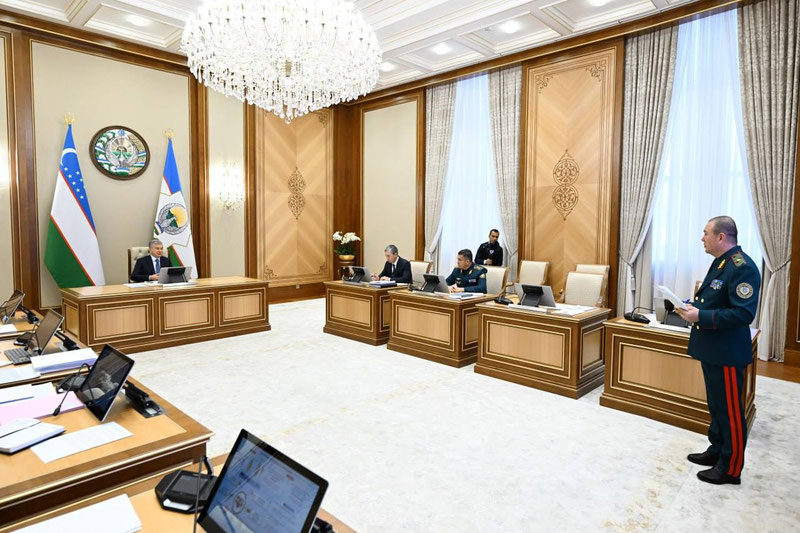
On March 12, President Shavkat Mirziyoyev reviewed a presentation of proposals on combating cybercrime and organized crime, as well as on increasing the effectiveness of preventing offenses committed using information technologies.
It was reported that the number of internet users in Uzbekistan has exceeded 31 million, of which 14 million actively use social networks. At the same time, cases of illegal use of the internet and social networks are also increasing.
Over the past six years, the number of reported cybercrimes in the country has increased 48-fold. Last year, 82 percent of fraud crimes and 76 percent of theft crimes were committed in cyberspace. As a result, the material damage inflicted on individuals and legal entities exceeded 2 trillion soums.
The presentation emphasized the need to strengthen liability for crimes committed through information technologies and to establish specific penalties for new types of cybercrimes. It was also proposed to strengthen liability for crimes related to financial pyramid schemes.
Furthermore, an initiative was put forward to establish administrative and criminal liability for allowing the use of officially registered electronic payment instruments, crypto wallets, SIM cards, and electronic accounts in the name of citizens for committing cybercrimes.
The presentation noted that cyberattacks targeting critical information infrastructure facilities are taking on a global scale, and it was emphasized that legal entities need to strengthen the security of their information systems in line with modern threats.
It was also proposed to legally reinforce that commercial banks, payment system operators, and payment organizations be held liable for material damage resulting from cybercrimes caused by their failure to comply with information security requirements.
The presentation also noted the emergence of new methods of organized crime. In particular, it was emphasized that it is necessary to strengthen liability for crimes related to the formation of illegal gangs and disturbing public order.
The President approved the proposals and gave relevant instructions to those responsible.