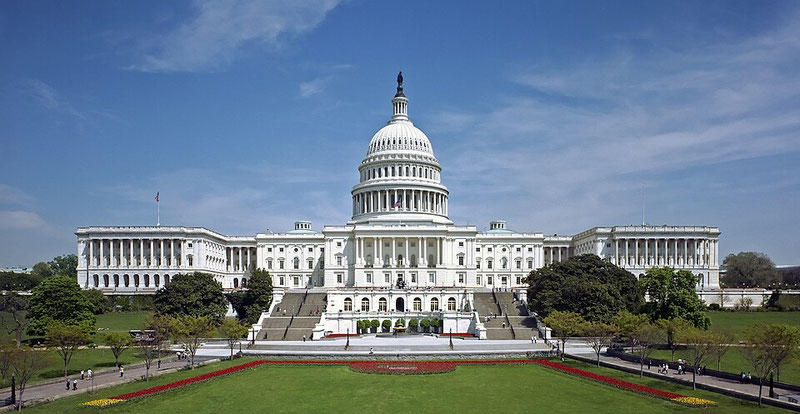
The U.S. House of Representatives has approved a bill that provides for supporting Ukraine and imposing additional sanctions against Russia. Reuters reported this.
According to the report, based on the voting results held on June 5, 226 congressmen supported the document, while 195 voted against. Among those who voted in favor of the bill were 207 Democrats, 18 Republicans, and one independent congressman.
For the bill to take effect, it must also be approved by the upper chamber of Congress — the Senate.
The document was introduced for congressional consideration in April of this year and provides for the establishment of a special fund for the reconstruction of Ukraine. It also allows the U.S. President to reinstate the authority to deliver defense articles to Ukraine and Eastern European states through credit or lend-lease mechanisms.
According to the bill, the U.S. Department of Defense retains the right to provide intelligence assistance to Ukraine until the end of 2027. The State Department, meanwhile, assumes obligations to strengthen the capabilities of the armed forces and border services of the Baltic states.
The document also expands mechanisms of pressure on Russia. In particular, the U.S. President is granted the authority to impose additional sanctions, block assets of individuals and legal entities associated with Russia, and strengthen export restrictions and tariffs. These measures are aimed at reducing Russia's ability to finance military operations.
Additionally, plans include expanding cooperation with European states, coordinating arms deliveries, training Ukrainian military personnel, and sharing intelligence information.
In a comment left on social media platform X, Ukraine's Ambassador to the U.S., Olga Stefanishyna, assessed the House's decision as an "important step forward."
Now the fate of the initiative depends on discussions in the Senate. There, the adoption of the document will be determined by the balance of political forces between Democrats and Republicans.
Some representatives of the Republicans are reportedly in favor of reducing the amount of foreign aid.
Reuters notes that even if the bill is approved by the Senate, U.S. President Donald Trump could veto it. According to the publication, since Trump returned to the White House in January 2025, aid allocated to Ukraine has slowed significantly.
Furthermore, the President has repeatedly emphasized his intention to maintain control over decisions on imposing sanctions and his unwillingness to delegate these powers to Congress.