In recent years, large-scale work has been carried out in the country to develop entrepreneurship, support investment projects, and create new production capacities. However, fully utilizing existing opportunities in the industry and ensuring the stable operation of previously launched enterprises remains an urgent task.
The presentation analyzed enterprises that are not operating at full capacity for various reasons and whose revenues have declined. It was noted that such situations are mainly observed in the textiles, construction materials, food, petrochemical, and electrical engineering sectors.
Experts stated that factors such as a shortage of working capital, infrastructure problems, project delays, outdated equipment, disruptions in raw material supply, and declining demand are negatively affecting enterprise operations. It was said that if these problems are resolved, there is potential to produce and export an additional 65.6 trillion soums worth of products.
In this regard, it was decided to introduce a new system for studying each enterprise individually and bringing them to full capacity. For this purpose, a republican headquarters will be established with the participation of state agencies and banks. Its representatives will go to the regions, identify problems within two weeks, and take measures to resolve them on-site.
Efforts to allocate loans to enterprises with the potential to restore operations, provide them with working capital, and resolve infrastructure and raw material issues will be intensified.
Attention was also drawn to large assets on the balance sheets of commercial banks. Mechanisms will be developed to re-engage 70 properties currently valued at over 10 billion soums each back into the economy, find investors for them, and direct them into production.
The presentation also discussed the effectiveness of projects implemented under investment programs. It was noted that some enterprises launched between 2021 and 2025 are not fully reflecting their activities in tax and statistical reports. Responsible officials were given instructions to rectify this situation.
Furthermore, a number of administrative barriers causing complaints from entrepreneurs were also reviewed. Proposals were put forward, including abolishing the practice of evaluating signboards as advertisements, simplifying the system of tax and financial penalties, improving the non-cash payment infrastructure, and enhancing the cashback system.
To facilitate foreign economic activity, it is also planned to reduce excessive paperwork and create favorable conditions for entrepreneurs to open trading houses abroad.
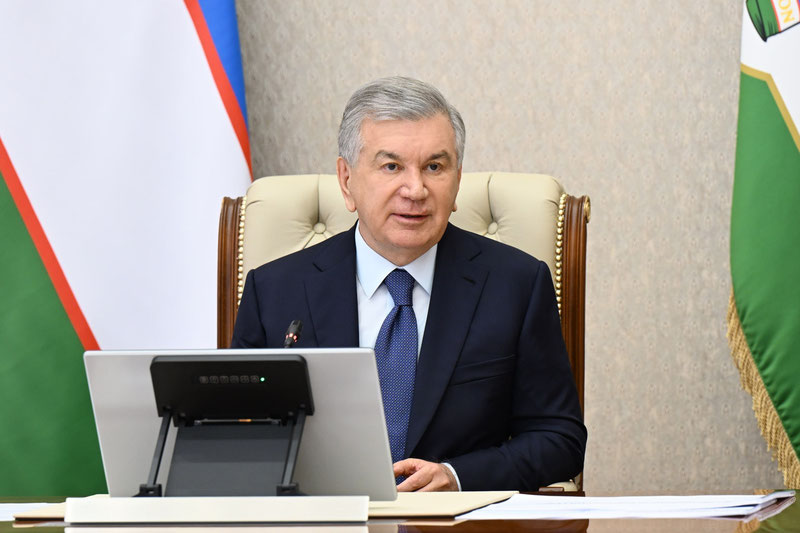
The head of state emphasized the need to reduce unnecessary barriers for entrepreneurship, simplify control mechanisms, and turn digitalization into a convenient tool for business.
At the conclusion of the meeting, specific tasks were given to the responsible officials regarding the full activation of industrial capacities, financial rehabilitation of enterprises, increasing exports, and creating new jobs.