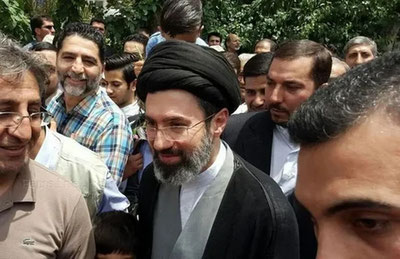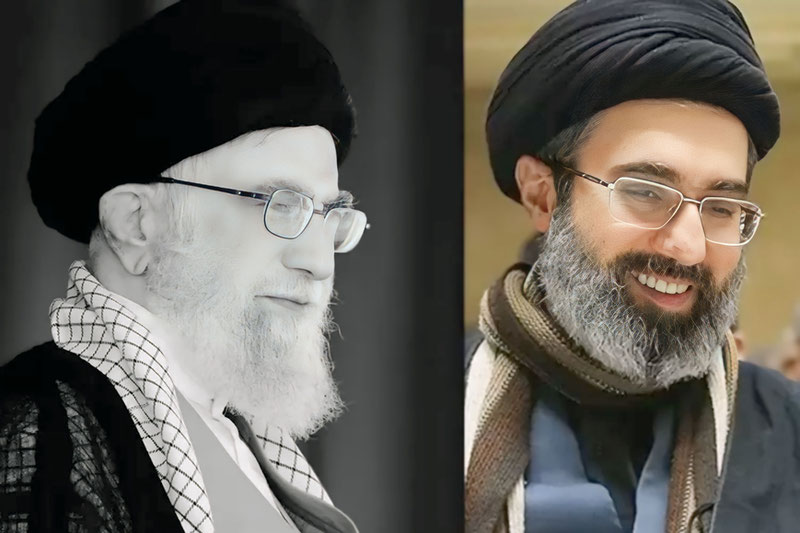
Iran announced its new supreme leader less than a week after the death of its former supreme leader, the late Ayatollah Ali Khamenei, in US and Israeli strikes. Experts and clerics selected Mojtaba Khamenei as his father's successor. He now leads the country during the most severe crisis period in the 47-year history of the Islamic Republic.
Who is Mojtaba Khamenei?
Mojtaba Khamenei has never participated in elections and was not chosen by popular vote. However, he has been an important figure within his father's inner circles for many years, having developed close ties, particularly with the Islamic Revolutionary Guard Corps (IRGC). In recent years, he has been seen by many experts as his father's natural successor.
Al Jazeera journalist Ali Hashem describes Mojtaba Khamenei as "his father's gatekeeper." "He continues his father's positions regarding relations with the US and Israel. That's why we expect a leader who will pursue a sharp, confrontational policy. No softness is expected," says Hashem. At the same time, he adds that if Mojtaba Khamenei survives the war, new political paths could open for Iran.
The Assembly of Experts and Candidate Selection
Iran's 88-member Assembly of Experts has the right to select the country's supreme leader. The assembly members had reached a majority consensus on the candidacy of Mojtaba Khamenei, but had delayed the official announcement. One member said: "The path of Imam Khomeini and the martyred Imam Khamenei has been chosen. The Khamenei name will continue."
Ayatollah Ali Khamenei led Iran for 37 years, coming to power after the 1979 revolution leader Ruhollah Khomeini. He was killed on February 28 during a US-Israeli attack in Tehran, an event that caused widespread unrest in the region.
Foreign Reaction and Trump's Statement
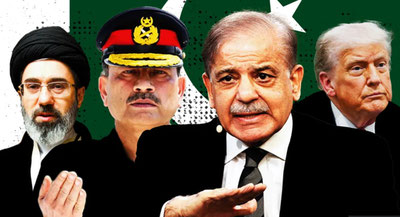
Israeli military officials have issued threats against Mojtaba Khamenei, while US President Donald Trump stated that the new leader would not last long without his support. In an interview with ABC News, Trump said: "He won't last long if he doesn't get our approval. Our support is necessary."
However, Iranian officials have opposed US interference in the candidate selection process, emphasizing that only Iranians have the right to determine their country's future. The speaker of Iran's parliament described Trump's claim as ridiculous, writing on the X network: "The destiny of dear Iran is determined only by the proud Iranian people, not by foreign states."
What Can Be Expected?
Mojtaba Khamenei's selection shows that hardline groups within Iran's internal political system are maintaining power. At the same time, hope for an agreement or negotiations is low in the second week of the war. As the war in the region continues, relations with the US and Israel are likely to become even more acute, with the probability of new casualties and territorial crises increasing. Follow the Iran-US and Israel conflict on Darakchi.uz.