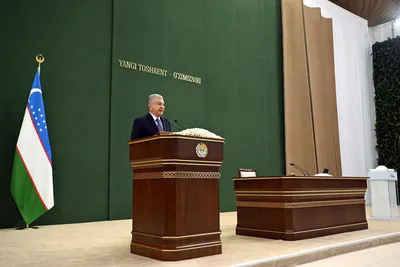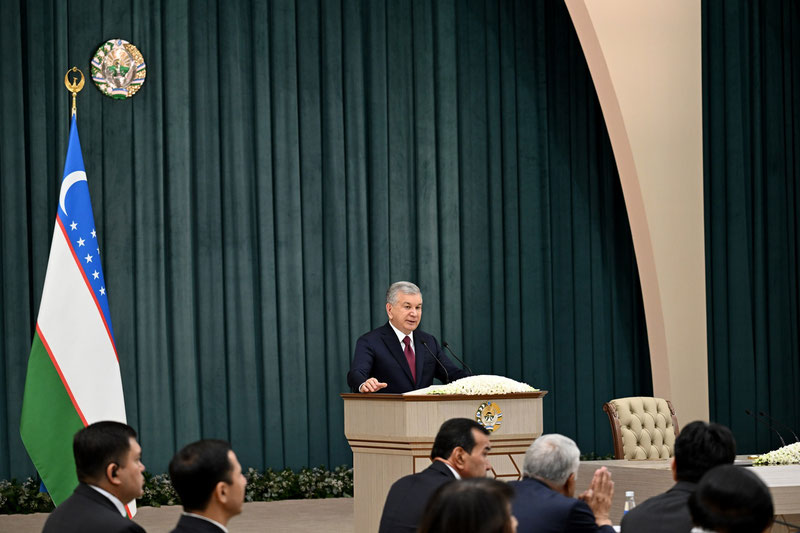
In Uzbekistan, it is planned to increase the volume of the creative economy to 145 trillion soums in the coming years by increasing the added value created in the field of culture and art. This was announced today, June 1, at a meeting attended by the President.
It was noted that the legal foundations for this sector have been established, and a special tax regime has been introduced for residents of the Creative Industry Park. Currently, construction of large creative parks has begun in the Shaikhontohur district of Tashkent city and in the city of Nukus.
Additionally, the Center for Contemporary Art, which will begin operations in September in Tashkent city, will serve as a new creative space for young people.
The meeting emphasized the need to actively involve craftsmen in international exhibitions to expand modern design elements in national products. In this regard, the number of exhibitions held in Europe, the USA, South and East Asia, and the Middle East will be increased.
The President noted that culture and art are an important bridge between peoples. As an example, it was mentioned that the Flower Festival, which started on May 24 in Namangan, has been visited by 1.5 million tourists to date, and the event was included in the Guinness World Records book.
In this regard, officials were tasked with developing a program to organize such prestigious events in each region throughout the year.
The meeting also paid special attention to improving the education system in the field of culture and art.
Now, in general education schools, music, fine arts, and technology subjects will be taught based on the "Art" curriculum. This program serves to develop students' creative thinking, teamwork skills, aesthetic taste, emotional intelligence, and innovative thinking.
According to the President's instruction, starting from the new academic year, this direction will be implemented as a pilot in 10 general education schools in each region.
Within the framework of the program, primary school students will be engaged in creativity through drawing, music, and games. In grades 5-7, collective creativity and free thinking will be taught; in grades 8-9, project development based on design, graphics, and artificial intelligence; and in grades 10-11, skills to turn them into finished products.