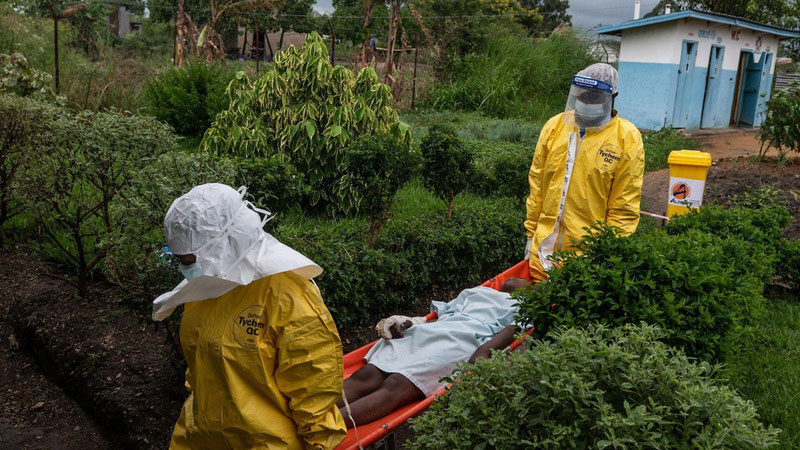
In the Ituri province, located in the eastern part of the Democratic Republic of the Congo, 11 patients infected with the Ebola virus have fled an isolation ward. This was reported by Bloomberg agency, citing data from the country's National Institute of Health, in a news report.
It is noted that this region is considered one of the main hotspots for the spread of the Ebola virus.
Additionally, in the settlement of Katana, an attack was carried out on specialists involved in burying a person who died from Ebola. As a result, the coffin containing the deceased's body was left at the scene. Experts emphasize that such a situation increases the risk of the virus spreading further.
According to official data, 60 deaths related to the Ebola virus and 344 laboratory-confirmed infected patients have been recorded in the Democratic Republic of the Congo and neighboring Uganda.
An incident involving Ebola patients escaping from an isolation ward was also reported on May 22 of this year. At that time, a medical facility where patients were being treated for the virus was set on fire. According to reports, doctors refused to hand over the body of a patient who died from Ebola to their relatives due to safety requirements. This caused discontent among the local population. Angry citizens set fire to part of the Rwampara Central Hospital.
Experts note that the bodies of Ebola victims are highly infectious. Therefore, in such cases, the deceased must be buried in accordance with special safety rules.
For reference, the Ebola virus was first identified in 1976 in the territory of what is now the Democratic Republic of the Congo. Scientists consider bats to be the natural carriers of the virus. However, these animals do not die from the disease.
Ebola is transmitted to the human body through direct contact with biological fluids such as blood, saliva, sweat, breast milk, or through broken skin. The disease can cause severe bleeding, organ failure, and death. Its initial symptoms include fever, muscle pain, severe fatigue, headache, and sore throat. Subsequently, nausea, diarrhea, skin rashes, and bleeding may develop.