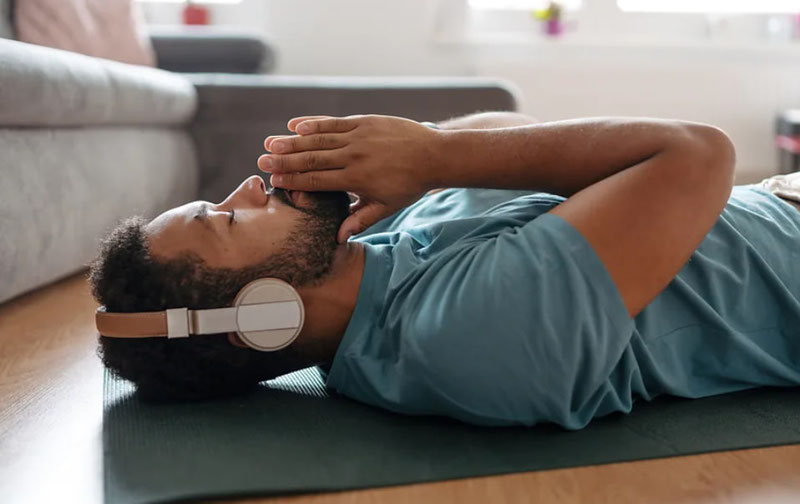
These methods, based on ancient practices (pranayama, qigong), calm the nervous system through conscious control of breathing.
Although breathing is usually an automatic process, controlling it has a positive effect on the body: heart rate slows down, stress hormones (e.g., cortisol) decrease, and the body enters a "rest and recovery" state.
The nervous system consists of two main parts:
The sympathetic system, which activates the "fight or flight" response
The parasympathetic system, which ensures calmness and recovery
Breathing exercises improve the balance of these systems and can be beneficial for stress, anxiety, and some chronic conditions.
However, pregnant women and those with respiratory diseases should consult a doctor first.
5 breathing exercises to reduce stress:
Cyclic breathing – slow and mindful breathing through the nose. Doing it for 5 minutes a day improves mood and reduces anxiety.
Box breathing – inhaling, holding, and exhaling for equal durations. Focuses the mind and calms.
4-7-8 breathing – inhale for 4 seconds, hold for 7 seconds, exhale for 8 seconds. Reduces stress and anxiety.
Diaphragmatic breathing – deep breathing with the diaphragm, observing abdominal movement. Balances the nervous system.
5-5-2 breathing – inhale for 5 seconds, exhale for 5 seconds, pause for 2 seconds. Helps with relaxation.
The most important thing is to do these exercises regularly for 3–5 minutes every day.